
Key facts: Downtown Arlington
- Downtown Arlington includes the city's oldest residential streets, with many homes built from the 1930s to the 1960s.
- Many older homes here sit on pier-and-beam foundations with crawlspaces beneath the floor.
- Homes built before 1978 may contain lead-based paint; disturbing it calls for lead-safe work practices.
- Older wiring and panels should be inspected by a licensed electrician after a fire.
- The covered ZIP code for Downtown Arlington on this site is 76010; the university campus ZIP code 76019 is not covered.
Covered area
Downtown Arlington ZIP codes covered by this line
Calls from these Downtown Arlington ZIP codes can be connected to an independent restoration contractor serving the area.
- 76010Neighborhoods around downtown Arlington, Division Street and east toward Collins Street. (Campus ZIP 76019 is not covered.)
About Downtown Arlington
Arlington's oldest residential streets
Arlington began as a railroad town in the 1870s, and its original downtown grew up around the tracks and what is now Division Street and Abram Street. The residential streets around it filled in over the following decades, and many of the homes standing today date from the 1930s through the 1960s. In recent years downtown has seen new apartments, restaurants and public spaces, alongside long-standing neighborhoods.
Housing near downtown is more varied than in the city's later suburbs. There are small wood-sided bungalows, brick cottages, post-war ranch houses, duplexes and fourplexes, and newer apartment buildings. Many of the older homes sit on pier-and-beam foundations with a crawlspace under the floor rather than on a slab. A large share of homes are rentals, including student housing near the university.
For fire restoration, that means more variety behind the walls, older materials that may need testing, crawlspaces that collect smoke and water, and frequent coordination between owners and tenants.
Construction
Downtown Arlington construction details
Pier-and-beam floors
A crawlspace under the floor collects water from firefighting and smoke through floor openings.
Wood siding
Painted wood siding burns more readily than brick and may carry old lead paint.
Plaster and older sheetrock
Some older homes have plaster walls, which handle smoke and water differently.
Original or mixed wiring
Older circuits, sometimes extended over decades, need an electrician's check.
Small, divided floor plans
Rooms close together mean smoke reaches every room quickly.
Detached garages and sheds
Older lots often have separate outbuildings with stored fuel and tools.
Under the floor
Crawlspaces: the part of the house people forget
In a pier-and-beam house, the floor sits on beams supported by piers, leaving an open space of a foot or more between the floor and the ground. During a fire, water pours through the floor wherever it can: around plumbing, through floor registers, between floorboards and through burned areas. It collects on the ground beneath the house and soaks any insulation fastened under the subfloor.
Smoke also finds its way below. Floor registers, gaps around pipes and openings in the subfloor let smoke into the crawlspace, where it leaves residue on joists, the underside of the subfloor and any ductwork running beneath the house.
Restoration in these homes includes the crawlspace: removing wet insulation, drying the space with dehumidifiers and air movers, cleaning or sealing smoky framing and checking ducts below the floor. Crawlspace work is cramped and can involve old debris, so it is a job for a crew with the right protection rather than a homeowner.
Assessment
What a contractor should check in a Downtown Arlington home
- 1
Electrical
A licensed electrician inspects the panel and affected circuits before power is restored.
- 2
Crawlspace
Water, wet insulation, smoke residue and ducts under the floor.
- 3
Older materials
Paint and suspect materials sampled before sanding, scraping or demolition.
- 4
Walls
Plaster or sheetrock, and whether cavities took smoke or water.
- 5
Outbuildings
Detached garages and sheds and their effect on the house.
- 6
Neighboring units (Downtown Arlington)
In duplexes and fourplexes, adjoining units are checked too.
What you might see
Downtown Arlington fire damage clues
| What you notice | Likely reason | What to ask |
|---|---|---|
| Musty smoke smell from floor vents | Water and smoke in the crawlspace | Will the crawlspace be dried and cleaned? |
| Soft or sagging floor near the fire | Wet subfloor or damaged joists | Is the floor structure safe? |
| Peeling paint on wood siding | Heat on old paint layers | Will lead-safe methods be used? |
| Cracked plaster | Heat or water stress | Can plaster be repaired rather than replaced? |
| Flickering lights in other rooms | Older wiring affected | Has an electrician checked the panel? |
| Smoke in the unit next door | Shared walls in a duplex | Will the adjoining unit be inspected? |
Older materials
Lead paint and asbestos in older homes
Homes built before 1978 may contain lead-based paint, especially on exterior wood siding, trim, windows and doors. Fire, water and repairs can disturb it. Under the EPA's Renovation, Repair and Painting Rule, contractors working on pre-1978 homes must follow lead-safe practices when disturbing painted surfaces above set limits. [2]
Older homes may also contain asbestos in materials such as some ceiling textures, floor tiles and their adhesives, pipe insulation and siding. The EPA advises that these materials are generally not a hazard undisturbed but should be tested before they are cut, sanded or removed. Ask the contractor how they handle testing and whether they are lead-safe certified.
Restoration
How restoration usually runs in Downtown Arlington
Securing a downtown home means boarding windows in wood siding or brick and covering roof openings. Older roofs may have several layers of shingles, and crews check that decking is sound before fastening tarps.
Drying extends to the crawlspace. Cleaning covers plaster or sheetrock, wood trim and floors, with lead-safe practices where old paint is disturbed. Odor work may include the crawlspace and ducts beneath the floor. Repairs need City of Arlington permits for regulated work, and areas being rebuilt may need to meet current codes for wiring and smoke alarms. [5]
Owners and tenants
Rentals, duplexes and student housing
Many homes near downtown are rented, including duplexes and houses leased to students. After a fire, tenants should notify the landlord or property manager right away. The building is usually the owner's responsibility, while tenants' belongings and temporary housing depend on renters insurance.
Owners should document each unit separately, coordinate access for contractors and keep tenants informed about timelines. In a duplex or fourplex, adjoining units can take smoke and water through shared walls and floors and should be inspected even if they look fine.
- Notify the landlord immediately
- Document each unit
- Inspect adjoining units
- Keep tenants informed
Climate
Storms and heat downtown
Older homes often have less insulation, and a house without power after a summer fire gets very hot quickly, driving smoke odor out of materials and making it hard to stay. Spring storms can push rain through fire-damaged roofs and into crawlspaces, adding to the water already under the house.
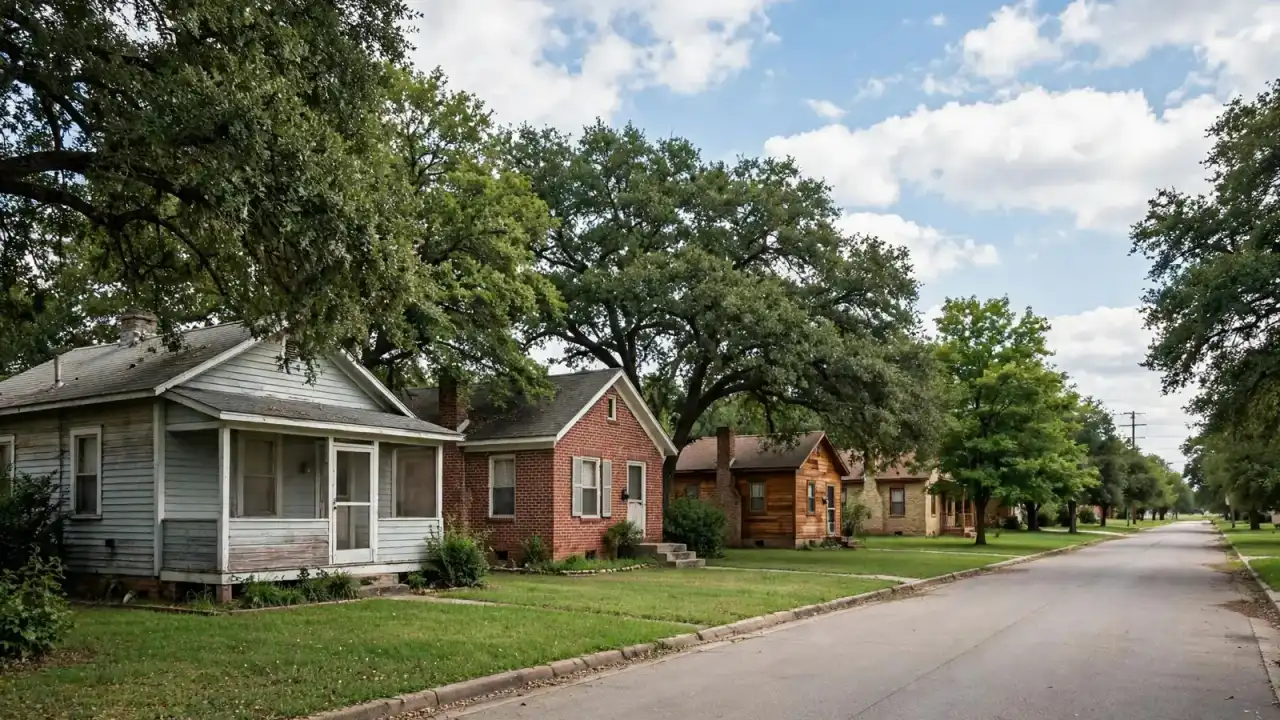
Mature trees on older streets shade homes but can drop limbs on fire-weakened roofs during storms. Ask whether limbs over a roof opening should be trimmed before tarping.
Prevention
Reducing fire risk in an older Downtown Arlington home
- Have older wiring evaluatedAn electrician can identify outdated or overloaded circuits.
- Avoid extension cord overloadsOlder homes often have few outlets; do not daisy-chain cords.
- Service gas heatersOlder wall heaters and furnaces need regular checks.
- Keep detached garages tidyStore fuel and chemicals away from heat and power tools.
- Install alarms in every bedroomOlder homes may have too few smoke alarms.
Common fires
Kitchens and space heaters
Small kitchens in older homes mean a stovetop fire's smoke reaches the whole house quickly. Older homes are also more likely to use space heaters in winter, a common cause of house fires when heaters are placed too close to bedding, curtains or furniture.
After a space heater fire, the heater, outlet and circuit should be checked, and the room cleaned for soot and odor. Bedrooms with burned bedding usually need contents removed and replaced.
Week one
A typical first week after a Downtown Arlington fire
- 1
Day 1 downtown
Fire department release, owner, tenants and insurer notified, house secured, photos taken.
- 2
Days 1-2 downtown
Electrician inspects; water extracted inside and in the crawlspace.
- 3
Days 2-3 downtown
Older paint and materials tested; contents sorted.
- 4
Days 3-5 downtown
Drying monitored above and below the floor.
- 5
End of the first downtown week
Scope agreed, including lead-safe work and any code updates.
On your call
Questions Downtown Arlington owners find useful on the call
- Will you check the crawlspace?Ask how they will dry and clean it.
- Are you lead-safe certified?Important for pre-1978 homes.
- Will you test for asbestos?Before any demolition in older homes.
- Do I need an electrician?Almost always yes in older homes after a fire.
- Can you coordinate with my tenants?Ask how they handle access in rentals.
Services
Services Downtown Arlington homeowners ask about
Drying crawlspaces
Water under pier-and-beam floors.
Read moreSmoke in small homes
Cleaning every room in compact floor plans.
Read moreOdor from below the floor
Treating smell in crawlspaces and ducts.
Read moreChoosing a contractor (Downtown Arlington)
Questions to ask, including lead-safe work.
Read more
Exterior
Wood siding, trim and exterior repairs
Many older homes near downtown have painted wood siding, wood soffits and wood window trim. Unlike brick, wood siding can char and burn on the outside of the house if flames break through a window or the roof. Heat can blister paint some distance from the fire, and smoke streaks stain siding above windows and doors.
Charred siding is removed and replaced with matching profiles where possible. Smoke-stained but sound siding can often be cleaned and repainted, with lead-safe methods where old paint is present. Soffit and fascia damaged near a roof opening are usually replaced along with the roof repair. Because older siding profiles may no longer be stocked, contractors sometimes salvage boards from less visible walls to patch the front.
Interior
Plaster walls and older interiors
Some of the oldest homes near downtown still have plaster walls on wood lath, while others were updated with sheetrock decades ago. Plaster is harder and more fire-resistant than sheetrock, and it often survives a fire well, but it is porous and holds smoke residue. Water from firefighting can loosen plaster from its lath, especially on ceilings.
Sound plaster can usually be cleaned, sealed with a stain-blocking primer and repainted. Cracks can be repaired by a skilled plasterer. Loose or sagging plaster ceilings are a hazard and need to be secured or removed. Original wood floors, trim and doors in older homes are often worth cleaning and refinishing rather than replacing.
Outbuildings
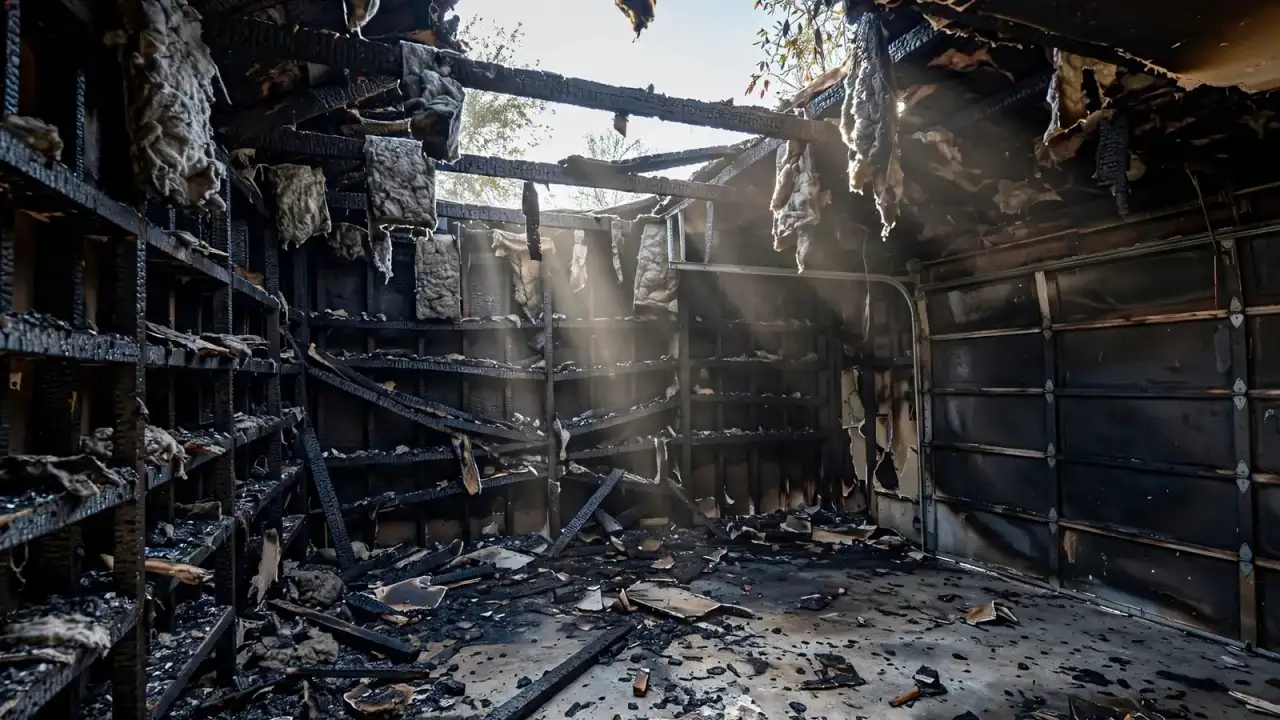
Detached garages, sheds and alleys
Older lots near downtown often have detached garages or sheds at the back, sometimes reached from an alley. These outbuildings frequently hold lawn equipment, fuel, paint and tools, and they can burn intensely. A fire in an outbuilding can send smoke into the house through open windows and attic vents, and radiant heat can damage the back of the house.
After an outbuilding fire, check the house for smoke and heat damage, and treat the outbuilding's contents with care. Fuel cans, propane and chemicals should be handled by professionals. Debris removal from alley-access lots may need planning for dumpster placement.
Clean or replace
What usually happens to older downtown materials
| Material | Usual outcome | Note |
|---|---|---|
| Sound plaster | Cleaned, sealed, repainted | Cracks repaired by a plasterer |
| Loose plaster ceiling | Secured or removed | Hazard until dealt with |
| Original wood floors | Dried and refinished | Charred boards replaced |
| Wood siding, smoke-stained | Cleaned and repainted | Lead-safe methods |
| Wood siding, charred | Replaced | Profiles may need matching |
| Crawlspace insulation | Removed if wet or smoky | Replaced after drying |
Close quarters
Neighbors close by
Lots near downtown are often narrow, and houses sit close together. A fire in one house can crack windows, scorch siding and send smoke into the house next door. Wood siding on a neighboring house is more vulnerable to radiant heat than brick. If a house near yours burns, check the facing wall, windows and attic, replace the HVAC filter and photograph any damage for your insurer.
Newer buildings
Downtown apartments and newer infill
Alongside older houses, downtown Arlington now has newer apartment buildings and townhomes. These are built to modern codes with fire sprinklers in many cases, which limits fire spread and water use. Even so, a fire in one unit can send smoke through corridors and shared ventilation, and sprinkler water can reach units below.
Residents of these buildings usually deal first with building management, whose insurer covers the structure and common areas. Renters insurance covers tenants' belongings and temporary housing in many cases. If you own a townhome, check what your HOA's master policy covers and what your own policy must cover.
Winter fires
Heating with older equipment
Older homes near downtown are more likely to rely on wall heaters, older gas furnaces or space heaters in winter. Heating equipment is a leading cause of home fires nationally, often when something that can burn is too close to the heat. After a heating-related fire, the appliance, its gas line or circuit, and any flue should be inspected before use.
If soot appears around a gas heater without a fire, stop using it: soot is a sign of incomplete combustion, which can also produce carbon monoxide. Make sure carbon monoxide alarms are working in any home with gas appliances.
Claims
Keeping records for an older home's claim
Older homes can raise questions during a claim: original materials that are no longer made, code upgrades required when parts are rebuilt, and crawlspace or foundation issues that were present before the fire. Photograph everything before cleanup, including the crawlspace if the contractor can safely capture it, and keep notes on what was original and what had been updated.
Ask your adjuster how your policy handles matching older materials and required code upgrades. Many policies include some ordinance or law coverage, but limits differ.
FAQ
Downtown Arlington fire restoration questions
Does this line cover Downtown Arlington?
Yes. Calls from ZIP code 76010 can be connected to an independent restoration contractor serving the area. Campus ZIP code 76019 is not covered.
Why does my house smell musty after the fire?
Water likely reached the crawlspace or wall cavities. Damp materials add a musty note to smoke smell and need drying.
Is lead paint a concern in my older home?
In homes built before 1978, yes. Contractors disturbing painted surfaces should use lead-safe practices.
Does the crawlspace need cleaning too?
If water or smoke got under the floor, yes. Wet insulation is removed and the space is dried and cleaned.
I rent my home. Who arranges repairs?
Usually the owner arranges building repairs. Tell your landlord right away and contact your renters insurer.
Can plaster walls be saved?
Often. Sound plaster can be cleaned, sealed and repainted, and cracks repaired.
Is my old wiring safe after the fire?
A licensed electrician should check it before any affected circuit is switched back on.
Do I need permits to rebuild in Downtown Arlington?
Regulated repair work in Downtown Arlington generally needs City of Arlington permits.
Can old wood siding be matched?
Sometimes from stock, sometimes by milling new boards or salvaging from less visible walls. Ask the contractor what they suggest.
Is my plaster ceiling safe after the fire?
If it sags, bulges or has loose sections, stay out from under it until it is secured or removed.
Do townhome owners need their own insurance after a fire?
Usually yes. The HOA master policy may cover some of the structure, but your own policy typically covers the interior and belongings. Check both.
Is my old wall heater safe after the fire?
Have it inspected before use, and make sure carbon monoxide alarms are working.
Can students living in rentals get help after a fire?
Students should contact their landlord, their renters insurer if they have one, and university student services, which often help with emergencies.
Will insurance cover matching old materials?
It depends on your policy. Discuss older siding, flooring and trim with your adjuster early.
Should the crawlspace be photographed too?
Yes, if it can be done safely. Water and smoke under the floor are part of the loss.
Can original wood floors in an older home be saved?
Often. Floors dried promptly can usually be sanded and refinished; charred or rotted boards are replaced with matching wood.
Why are there holes cut in my floor?
Contractors sometimes open small sections to reach and dry the crawlspace or wet subfloor beneath a burned area.
Is it safe to stay in my older home during repairs?
That depends on the damage, the work under way and your health. Lead-safe and asbestos precautions may require you to be out during some steps.
Do older homes need more smoke alarms after repairs?
Rebuilt areas generally need alarms to current code, and adding alarms in every bedroom is wise regardless.
Can my detached garage be rebuilt the same way?
Usually it can be rebuilt, though current codes and setbacks apply. Your contractor can check what the City of Arlington requires.