
Key facts: North Arlington
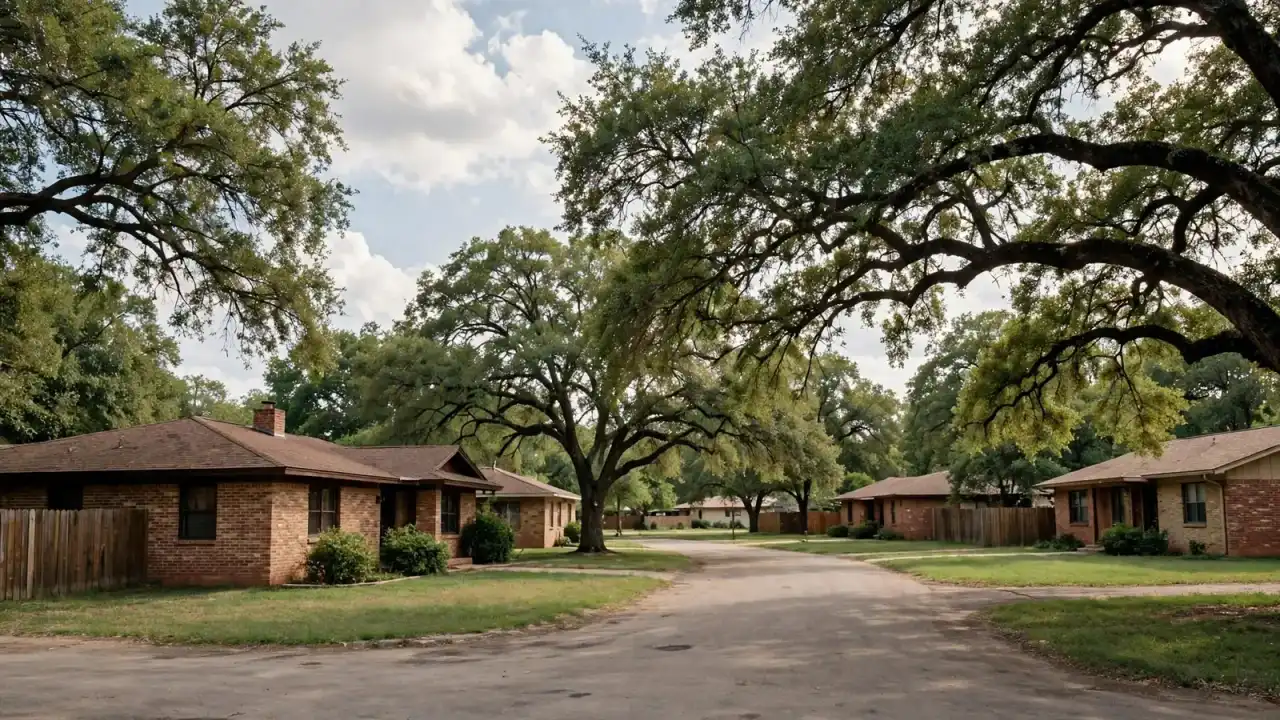
- North Arlington includes established neighborhoods north of Interstate 30 and Division Street, with many homes built from the 1960s to the 1980s.
- Typical homes are single-storey brick veneer ranch houses with vented attics and attached garages.
- Older homes may have original wiring or panels that should be inspected after a fire.
- Some materials in pre-1980s North Arlington homes may contain asbestos and should be sampled before anyone disturbs them.
- The covered ZIP codes for North Arlington on this site are 76006, 76011 and 76012.
Covered area
North Arlington ZIP codes covered by this line
Calls from these North Arlington ZIP codes can be connected to an independent restoration contractor serving the area.
- 76006Northernmost Arlington neighborhoods near River Legacy Park and the Trinity River corridor.
- 76011Neighborhoods around the Entertainment District, Lamar Boulevard and Collins Street.
- 76012 (North Arlington)North-central and northwest Arlington neighborhoods near Randol Mill and Fielder roads.
About North Arlington
Established neighborhoods north of the freeway
Arlington grew fast after the 1950s, and much of that growth filled the land north and west of the old downtown. Today North Arlington is a mix of quiet residential streets, apartment communities, shopping along Collins and Cooper, and the Entertainment District with its stadiums and amusement park. Along the Trinity River, River Legacy Park provides a large green corridor of trails and woods.
The typical single-family home here is a single-storey brick veneer ranch built between the 1960s and the 1980s. Floor plans are long and low, with a living room, a den with a brick fireplace and sometimes wood paneling, a galley or L-shaped kitchen, three or four bedrooms down a hall and an attached two-car garage. A vented attic stretches over the whole house, holding the ductwork and often the furnace or air handler.
Many of these homes have been updated, with new kitchens, flooring and HVAC, but original framing, attics, wiring and sometimes ceiling textures remain. Mature oaks and pecans shade many lots and overhang roofs.
Construction
North Arlington construction details
Long single-storey layouts
One attic over the whole house carries smoke from one end to the other.
Brick fireplaces and paneled dens
Porous brick and wood paneling hold soot and odor.
Older electrical panels
Original or aging panels and wiring need an electrician's check after heat or water.
Sprayed ceiling textures
Popcorn or acoustic textures in older homes may need testing before disturbance.
Attached two-car garages
Garage fires push smoke into the kitchen or utility room.
Mature trees (North Arlington)
Large limbs over roofs complicate tarping and can fall in storms.
Smoke paths
How smoke spreads through a North Arlington ranch house
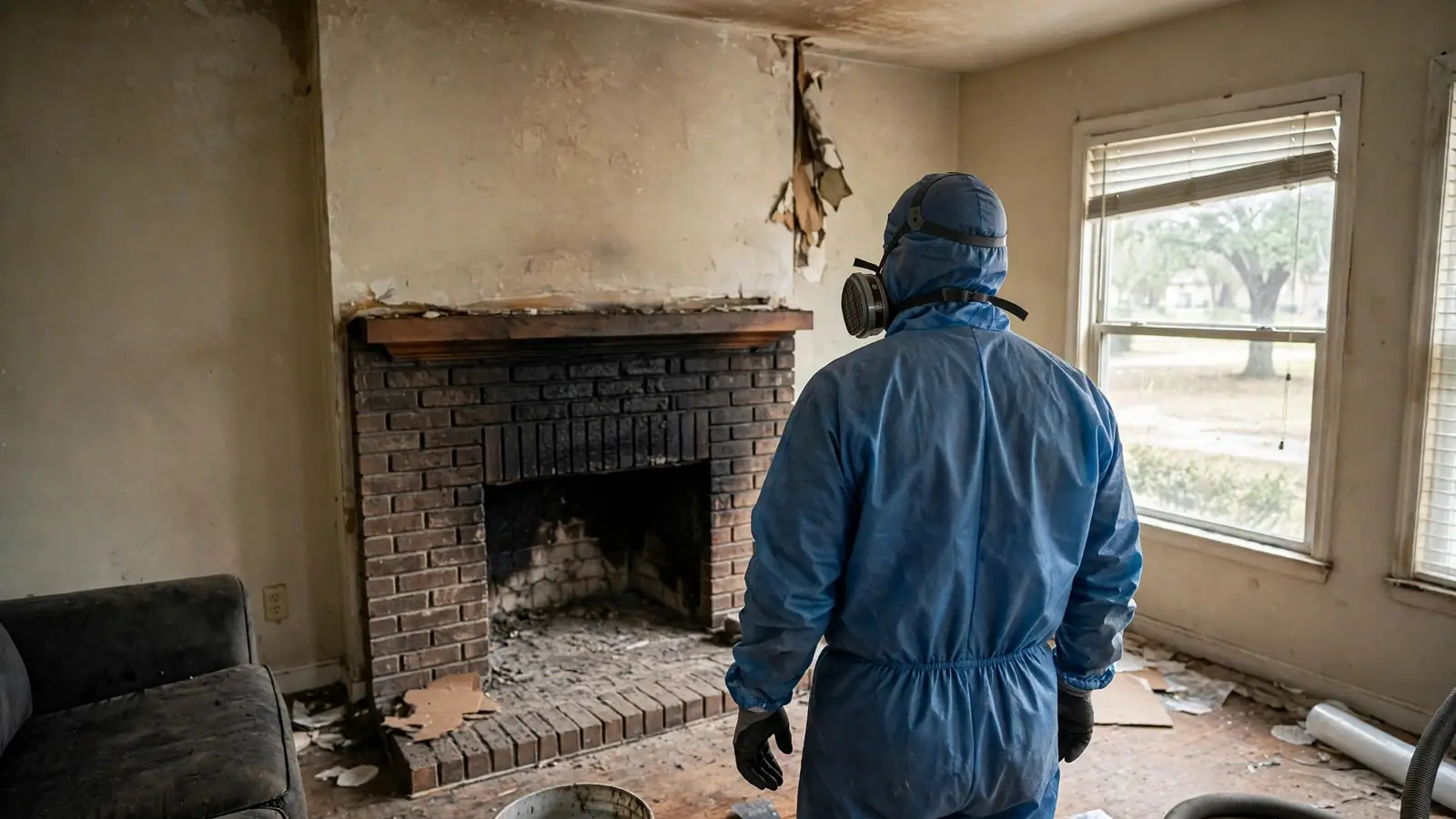
In a long, single-storey home, smoke spreads mostly sideways: along the ceiling, down the hall and up into the attic, which links every room. Smoke entering the attic through gaps around light fixtures, the attic hatch and wall top plates can drop back into bedrooms at the far end of the house. Because the air handler and ducts are often in that attic, smoke can also be drawn into the system and pushed out through every register.
Dens with brick fireplaces deserve special attention. Brick absorbs soot into its pores and mortar joints, and real or veneer wood paneling absorbs odor unevenly. Popcorn ceilings trap residue in their texture.
Garage fires tend to affect the kitchen or utility room first, then spread through the attic over the garage, which often connects to the house attic.
Assessment
What a contractor should check in a North Arlington home
- 1
Electrical first
Have the panel and affected circuits inspected by a licensed electrician.
- 2
The whole attic
Insulation, decking and ductwork along the length of the house.
- 3
Ceiling texture testing
Sample older textures before any scraping or removal.
- 4
Masonry and paneling
Fireplace walls and dens need specific cleaning methods.
- 5
Garage connections (North Arlington)
Door, shared wall and attic over the garage.
- 6
Trees over the roof (North Arlington)
Limbs that may need trimming before tarping.
What you might see
North Arlington fire damage clues
| What you notice | Likely reason | What to ask |
|---|---|---|
| Smell in far bedrooms | Smoke travelled through the attic | Will attic insulation be checked? |
| Black in brick mortar joints | Soot absorbed into masonry | How will the fireplace wall be cleaned? |
| Breaker trips or warm outlets | Heat or water affected older wiring | Has an electrician inspected the panel? |
| Stained popcorn ceiling | Soot in old texture | Has it been tested before removal? |
| Odor when the furnace starts | Smoke in attic ducts or air handler | Will ducts be cleaned or replaced? |
| Limb on a tarped roof | Mature tree over the opening | Can the tree be trimmed before tarping? |
Electrical
Older electrical systems in North Arlington
Houses from the 1960s and 1970s were built for far less electrical demand than modern households create. Over the years owners have added central air, larger kitchens, more bathrooms, home offices and electronics. Some homes have had panels and wiring upgraded; others still rely on original components.
After any fire, and especially one that may have started in an outlet, appliance or wall, a licensed electrician should inspect the panel and affected circuits before power is restored to those areas. In Texas, electricians are licensed by the Texas Department of Licensing and Regulation. [2] If upgrades are recommended, doing them while walls are open for restoration is often practical; ask your insurer how code-required upgrades are handled.
Restoration
How restoration usually runs in North Arlington
Securing these homes usually means boarding windows in brick walls without damaging the brick, and tarping composition shingle roofs, sometimes after trimming limbs that hang over the opening. Drying focuses on slab floors under carpet, tile and wood, and on the base of walls in hallways.
Cleaning covers the attic, the length of the house and specialized work on brick fireplaces and paneling. Older ceiling textures are tested, then cleaned, sealed or removed. Odor work focuses on the attic, ducts and soft furnishings. Repairs need City of Arlington permits for regulated work, and areas being rebuilt may need to meet current codes. [5]
Masonry and wood
Fireplace walls and wood paneling
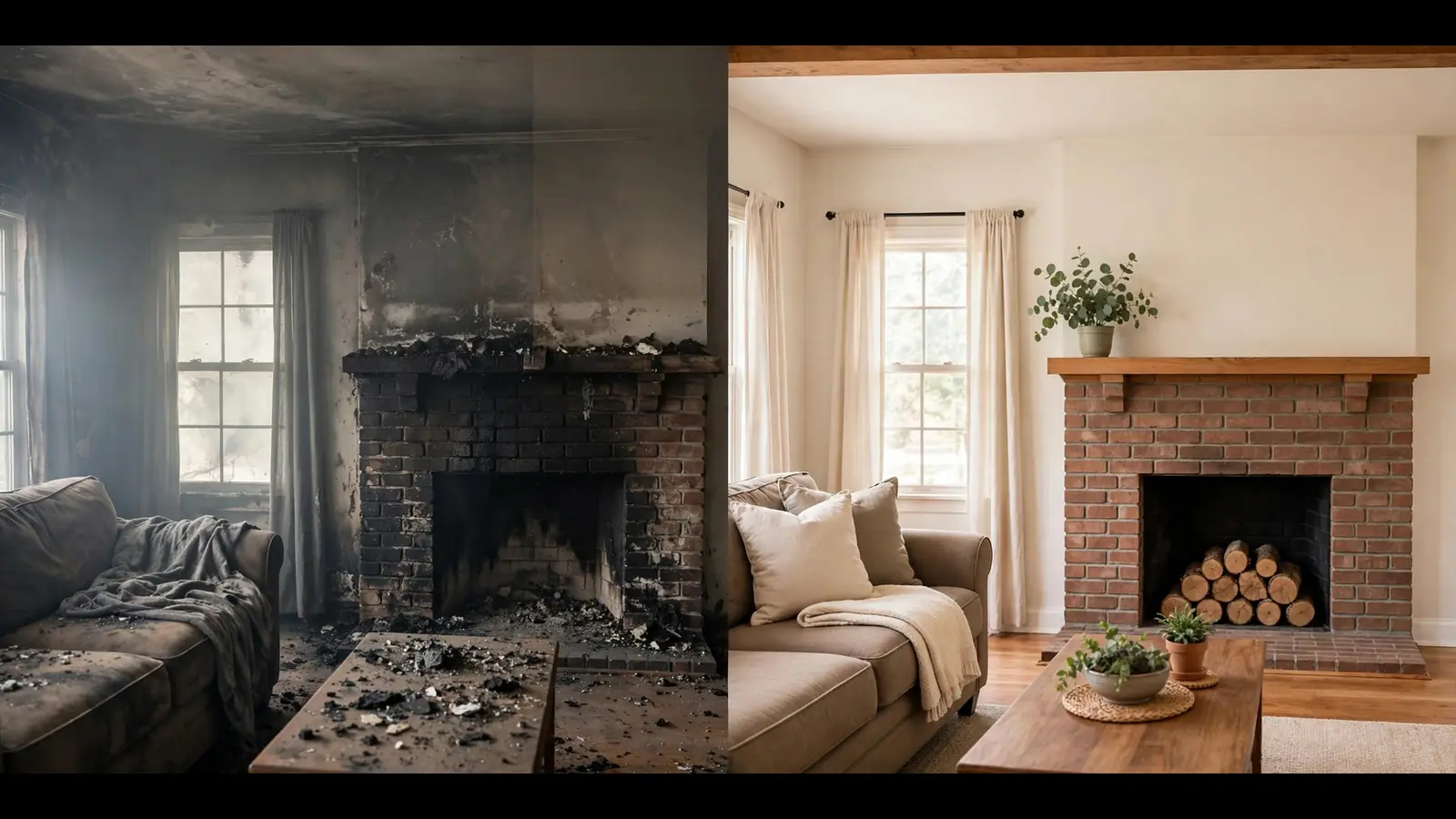
Floor-to-ceiling brick fireplace walls are a hallmark of 1970s Arlington dens. After a fire, soot settles deep in the brick and mortar. Cleaning starts with dry methods, then masonry-safe detergents and soft brushes, and sometimes gentle blasting for heavy deposits, followed by a breathable sealer.
Wood paneling ranges from solid boards to thin veneer. Solid paneling with an intact finish often cleans and refinishes well. Thin veneer that absorbed heavy smoke is more often sealed and painted or replaced.
- Dry methods first on brick
- Masonry-safe cleaners
- Seal brick afterwards
- Assess paneling type before cleaning
Climate
Storms and heat in North Arlington
Spring storms bring hail, high wind and heavy rain. Mature trees, a highlight of North Arlington streets, can drop limbs on roofs already weakened by fire. Tarps over roof openings need checking after every storm.
Summer attics in single-storey homes get very hot, driving smoke odor out of insulation and decking into the rooms below. Homeowners often notice smell returning on the hottest afternoons until the attic is dealt with.
Prevention
Reducing fire risk in a North Arlington home
- Have the electrical system evaluatedEspecially in homes with original panels or many added circuits.
- Have the chimney inspectedFireplaces used regularly need cleaning and checks.
- Keep space heaters clearThree feet from anything that can burn.
- Trim limbs over the roofReduces storm damage and makes tarping easier if ever needed.
- Replace old smoke alarmsAlarms older than ten years should be replaced.
Common fire types
Kitchen and garage fires in ranch homes
In compact ranch kitchens, a stovetop fire's smoke reaches the den, dining room and hallway quickly, and burned-food residue clings to cabinets, ceilings and fabrics. Many North Arlington kitchens have been remodeled, so new cabinets and counters sit next to original walls and ceilings that need different cleaning approaches.
Garage fires often start with electrical faults, stored fuel and chemicals or appliances such as second freezers. The door into the kitchen or utility room is the main smoke route into the house, and the attic over the garage often links to the main attic.
Week one
A typical first week after a North Arlington fire
- 1
Day 1 in North Arlington
Fire department release, insurer notified, windows boarded, roof tarped, photos taken.
- 2
Days 1-2 in North Arlington
Electrician inspects; water extracted; drying started.
- 3
Days 2-3 in North Arlington
Older materials tested; contents sorted and packed out.
- 4
Days 3-5 in North Arlington
Drying monitored; attic and ducts inspected along the whole house.
- 5
End of the first North Arlington week
Scope agreed, including any electrical upgrades and testing results.
On your call
Questions North Arlington owners find useful on the call
- Do I need an electrician before power comes back?In older homes after a fire, almost always yes.
- How will you clean the brick fireplace wall?Ask about dry methods and masonry-safe cleaners.
- Will you test the ceiling texture?Important in homes from before the 1980s.
- How far into the attic will you check?Ask for the whole length of the house.
- Can you work around my trees?Ask about trimming limbs over roof openings.
Services
Services North Arlington homeowners ask about
Soot on brick and paneling
Cleaning masonry and wood in older dens.
Read moreAttic odor (North Arlington)
Treating smoke smell in long single-storey attics.
Read moreRoof tarping under trees (North Arlington)
Covering openings on shingle roofs.
Read moreGarage fire aftermath (North Arlington)
Cleaning up after a garage fire.
Read more
Remodels
Renovated and original sections side by side
Many North Arlington homes have been partly updated over the decades. A kitchen may be new while the bedrooms keep original sheetrock and ceiling texture; a den may have new flooring but the original paneling and fireplace; the HVAC may be modern while the attic insulation is decades old. During restoration, each part may need a different approach.
New cabinets and counters clean with modern methods; original textures may need testing; older paneling needs wood-appropriate cleaning or sealing. The contractor should identify which parts are original and which are newer before choosing methods, and explain any differences in the scope.
Foundations
Pier-and-beam and slab homes in North Arlington
Most North Arlington homes from the 1960s onward sit on concrete slabs over the region's expansive clay soil. Firefighting water on a slab soaks carpet pad and the bottom of walls, and water under tile or wood floors can take time to dry. Water pooling outside against the foundation should be directed away, since clay swells when wet.
A smaller number of older homes, especially close to the original downtown, sit on pier-and-beam foundations with crawlspaces. In those homes, water can drip through the floor into the crawlspace and smoke can enter it through floor openings. Drying and cleaning then extend below the house.
Multifamily
Apartments and duplexes in North Arlington
North Arlington has many apartment communities and duplexes, especially near the Entertainment District and along major roads. In a shared building, a fire in one unit can send smoke and water into neighbors' units through shared walls, ceilings and attic spaces. Tenants should notify their landlord or property manager immediately; the building is usually the owner's responsibility, while tenants' belongings and extra living expenses depend on renters insurance.
If you own a duplex or a rental home in North Arlington, coordinate with tenants and your insurer early. Document each unit separately.
Attic check
Signs your North Arlington attic took smoke
- Odor at the hatchA smoky smell when you open the attic hatch.
- Dark insulation near openingsGrey or black insulation around light fixtures and the hatch.
- Residue on the air handlerSoot on the furnace cabinet or ducts if they are in the attic.
- Smell on hot afternoonsOdor that grows as the attic heats up.
- Stains on ceilings belowDark rings around fixtures or along joists.
Event crowds and access
Near the Entertainment District
Parts of North Arlington sit close to the stadiums and amusement park. On game and event days, traffic and parking restrictions can slow access for restoration crews and equipment. If your home is near the Entertainment District and repairs are scheduled during busy periods, mention it on your call so the contractor can plan arrival times and parking for trucks and dumpsters.
Large crowds also mean more vehicles parked on residential streets, which can limit space for a dumpster or storage container. Some contractors use smaller trailers on tight streets.
Near the river
River Legacy Park and the Trinity River corridor
Neighborhoods near River Legacy Park back onto woods and floodplain along the Trinity River. Humidity is higher near the river, and wooded areas can produce smoke from brush fires during dry spells. Drying a fire-damaged home here relies on dehumidifiers, and owners should check attics for smoke after any nearby brush fire, since smoke can enter through soffit and ridge vents.
Households
Rentals and older owners in North Arlington
North Arlington has a mix of long-time owners, many of whom have lived in their homes for decades, and rental properties. Long-time owners often have years of belongings, heirlooms and paperwork that need careful sorting after a fire; ask the contractor about pack-out with an inventory and secure storage. Landlords should coordinate with tenants promptly and document each unit separately for insurers.
HVAC
Ductwork in North Arlington attics
Ducts in older North Arlington homes may be original metal trunks with flexible runs added during later HVAC replacements, or entirely flexible duct. Metal ducts usually clean well with brushing and HEPA vacuuming. Flexible duct with a corrugated liner holds residue and odor and is often replaced after heavy smoke. The furnace or air handler, often in the attic or a hall closet, should be inspected by an HVAC technician before the system is run regularly.
Replacing a filter is not enough if smoke reached the ducts. Odor that surges when the system starts is the clearest sign the ducts need attention.
FAQ
North Arlington fire restoration questions
Does this line cover North Arlington?
Yes. Calls from ZIP codes 76006, 76011 and 76012 can be connected to an independent restoration contractor serving North Arlington.
Why does my far bedroom smell of smoke?
In long ranch homes, smoke travels through the attic and drops through ceiling openings into rooms far from the fire.
Is my old electrical panel safe after the fire?
Have a licensed electrician inspect it before power is restored to affected areas.
Should I worry about my popcorn ceiling?
Textures in older homes may contain asbestos. Ask for testing before anything is scraped.
Can my brick fireplace wall be cleaned?
Usually. Masonry needs dry methods and suitable cleaners, then a breathable sealer.
Will my wood paneling come clean in North Arlington?
Solid paneling often does. Thin veneer that absorbed heavy smoke may be sealed and painted or replaced.
Does the furnace in the attic need cleaning?
If smoke reached the attic or the system was running, the air handler and ducts should be checked.
Do I need permits to rebuild in North Arlington?
Regulated repair work in North Arlington generally needs City of Arlington permits.
Can a fire in a neighboring apartment damage my unit?
Yes. Smoke and water often travel through shared walls, ceilings and attic spaces. Tell your landlord and your renters insurer.
My kitchen is new but the rest of the house is original. Does that matter?
It can. New and original materials often need different cleaning methods, and older ones may need testing first.
Can my contractor work around game-day traffic?
Usually, with planning. Mention event days near the stadiums when you call so arrival and parking can be arranged.
Should older relatives stay elsewhere during cleanup?
Often that is wise. Cleaning and demolition stir up fine particles that are harder on older adults and anyone with heart or lung conditions.
Do my old metal ducts need replacing?
Usually not. Metal ducts generally clean well. Flexible sections that absorbed heavy smoke are more often replaced.
How do I know if smoke reached my ducts?
Odor or a dark film at the registers when the system starts is the clearest sign.
Can soot be cleaned off my old hardwood floors?
Often. Finished hardwood usually cleans; if the finish dulled or water cupped the boards, sanding and refinishing may follow drying.
Will repairs need to meet current codes?
Areas being rebuilt generally must meet current codes, which can mean electrical or smoke alarm updates. Ask your contractor and insurer.
Should I keep my old smoke alarms?
Replace any exposed to fire or heavy smoke and any older than ten years.
Is it safe to use my fireplace after the fire?
Have the chimney and firebox inspected first. Heat and debris can damage the liner and flue.
Can my hall closet contents be saved?
Linens and clothes often clean well with smoke-specific laundering. Items with heavy odor after cleaning may need replacing.
Who checks my gas furnace after a fire?
A licensed HVAC technician should inspect it, and Atmos Energy should be called if you smell gas.
Can my den paneling be painted instead of replaced?
Often. Cleaned paneling sealed with a stain-blocking primer can be painted, which also locks in residual odor.