
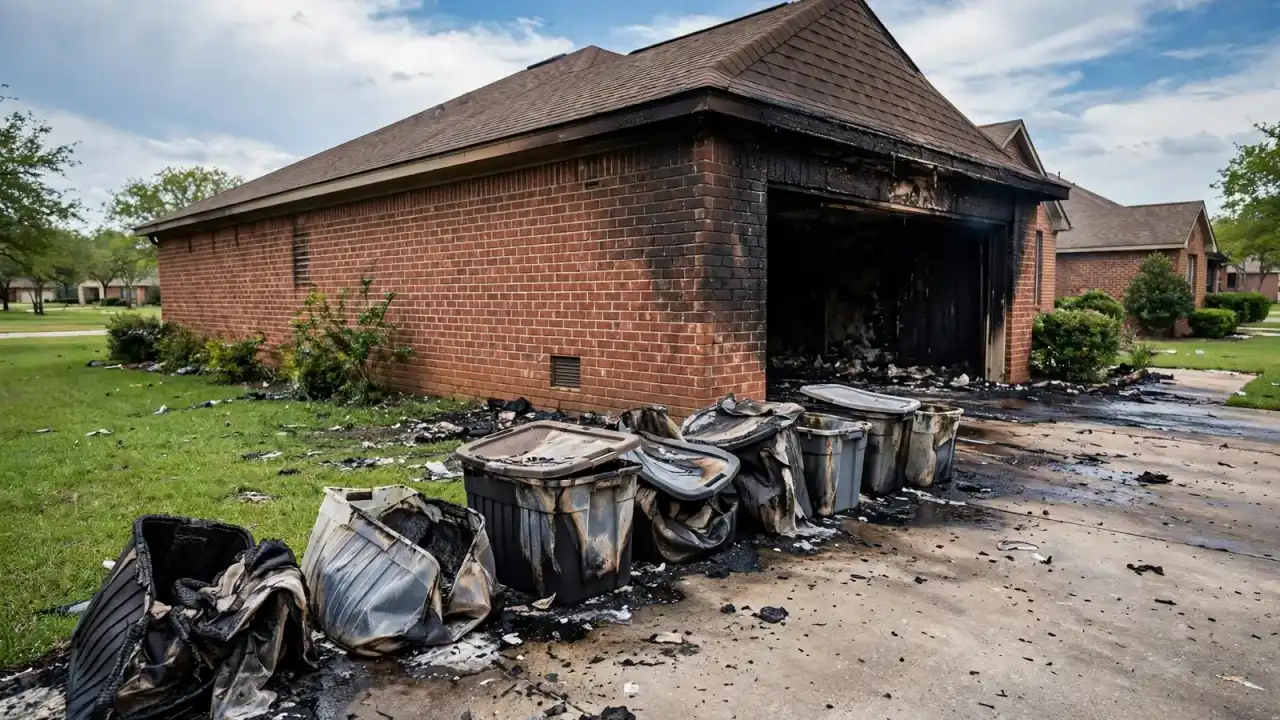
Key facts: Garage fire cleanup
- Garage fires often involve fuel, chemicals and plastics, which produce dense, oily smoke.
- Damaged lithium-ion batteries can reignite or release toxic gases after a fire [1].
- The wall and door between an attached garage and the house are meant to slow fire, but smoke still gets through.
- Do not enter until fire officials say the building is safe [2].
Background
Why garage fires are different
A typical Arlington garage might hold one or two vehicles, a second refrigerator or chest freezer, a water heater, lawn equipment with fuel, paint and solvents, pool chemicals, holiday decorations in plastic bins, and a workbench full of power tools and chargers. That mix burns hot and produces some of the dirtiest smoke a house fire can make.
Most Arlington homes have an attached garage that shares at least one wall, and often the attic, with the living space. Building codes require fire-resistant separation between them, typically a layer of fire-rated sheetrock and a solid or rated door. That separation buys time, but smoke still squeezes through gaps around the door, penetrations for pipes and wires, and the shared attic.
The result is that a garage fire is usually two jobs: the garage itself, which may need structural repair and a new door, and the house, which needs smoke cleanup in the rooms nearest the garage and often throughout.
Checklist
First steps after a garage fire
- 1
Wait for the release
Do not go in until the fire department says the garage and house are safe.
- 2
Ask about hazards
Tell firefighters about fuel, propane, pool chemicals and batteries that were stored there.
- 3
Leave batteries alone
Swollen, scorched or damaged lithium-ion batteries can reignite. Do not move them.
- 4
Call your insurer
Start the claim and ask what they need from you.
- 5
Photograph everything
The garage, its contents and the rooms next to it, before anything is moved.
- 6
Secure the opening
A burned garage door leaves the house exposed; get it closed up.
Hazards
Batteries, fuel and chemicals
Lithium-ion batteries in e-bikes, scooters, power tools and electric vehicles are a growing cause and casualty of garage fires. The NFPA warns that damaged lithium-ion batteries can overheat, catch fire again and give off toxic gases [1]. Leave them where they are, tell the fire department and your contractor, and let qualified people remove them.
Pool chemicals such as chlorine products can react dangerously with heat, water or other chemicals. Fuel cans and propane tanks that were heated may be damaged. Paint, solvents and pesticides may have leaked. None of these should be moved or thrown in the household trash by a homeowner after a fire.
Inside
Smoke in the house next to the garage
The rooms most likely to be affected are the ones the garage door opens into, usually the laundry, mudroom or kitchen, and any bedroom or bonus room above the garage. Smoke also travels through the attic over the garage into the attic over the house and down through ceiling openings.
Look for a dark film around the door frame, smell in closets near the garage, and residue on vents. Turn the HVAC off until it has been checked, especially if the air handler is in the garage or the attic above it, as it is in many Arlington homes. The smoke damage and odor pages explain how these rooms are cleaned.
Contents
What usually happens to garage contents
| Item | Usual outcome |
|---|---|
| Plastic bins and contents | Often discarded if melted; contents sorted |
| Hand tools | Usually cleaned |
| Power tools and chargers | Inspected; often replaced if heat-exposed |
| Lawn equipment with fuel | Inspected by a professional before use |
| Second refrigerator or freezer | Usually replaced if smoke- or heat-damaged; food discarded |
| Vehicles | Inspected and professionally cleaned or handled by auto insurer |
Vehicles
Your car after a garage fire
A car parked in a burning garage may have heat damage to paint, lights and tires, and smoke inside the cabin through the vents and door seals. Vehicle damage is usually handled under your auto policy's comprehensive coverage rather than the homeowner policy. Do not start a car that was exposed to significant heat until it has been checked.
Even if the car looks fine, the cabin probably smells. Professional interior cleaning and a new cabin air filter usually solve that.
Repairs
Rebuilding the garage
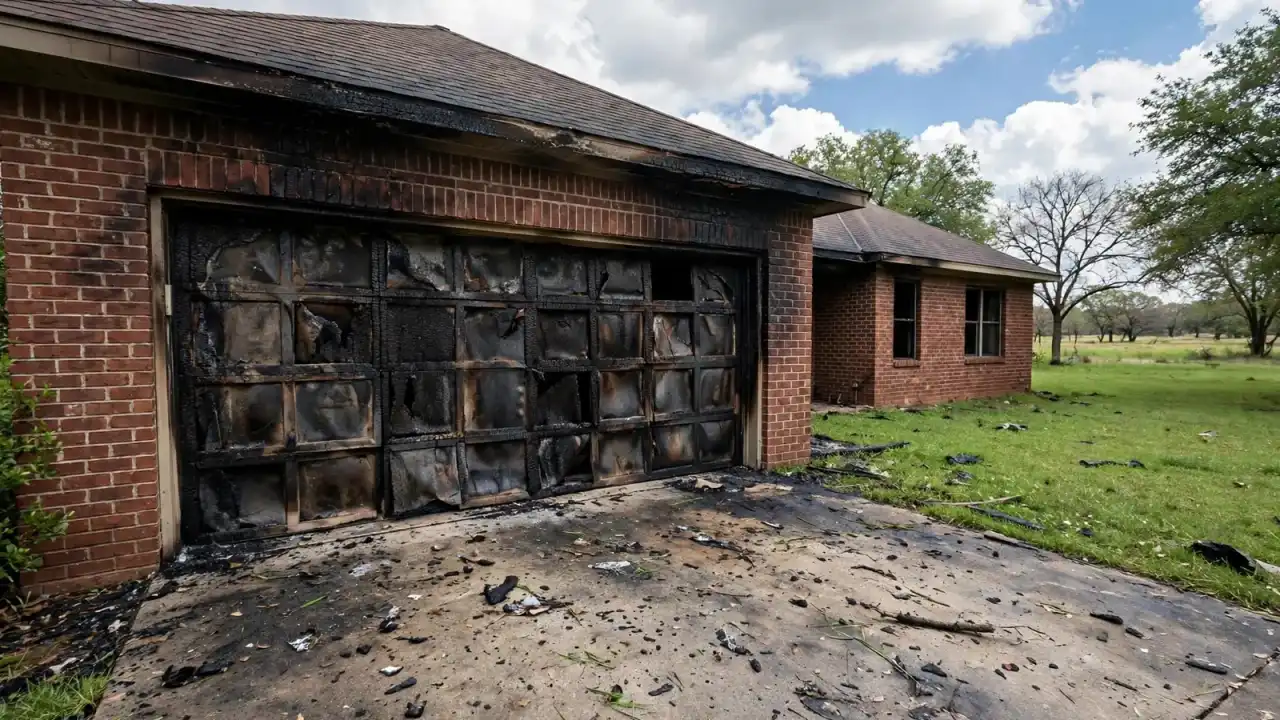
Garage repairs often include new sheetrock on the shared wall and ceiling to restore the fire separation, a new overhead door, new wiring and lights, and sometimes framing and roof repairs. Work in Arlington generally needs City of Arlington permits [3]. Texas does not issue a general state licence for restoration or building contractors, but electrical work must be done by electricians licensed through the Texas Department of Licensing and Regulation [4].
If you live in an HOA community, the new garage door may need to match approved styles and colours.
Prevention
Garage fire prevention for the future
Many garage fires start with electrical overloads, charging batteries, heat-producing appliances, or flammable liquids near an ignition source such as a water heater or dryer. Plug heat-producing tools and appliances directly into outlets, not extension cords. Charge e-bike and tool batteries with the manufacturer's charger, away from clutter, and not unattended overnight. Store fuel and chemicals in approved containers away from water heaters and dryers.
Keep the door between the garage and the house closed, and do not prop it open; it is designed as a barrier. A smoke alarm or heat alarm suited to garages can add early warning.
FAQ
Garage fire questions
Is my house safe to live in after a garage fire?
That depends on how far the fire and smoke reached. The fire department decides whether it can be entered; a contractor can then assess smoke in the rooms next to the garage.
Who handles my burned car?
Usually your auto insurer under comprehensive coverage. Report it separately from the home claim.
Can I throw damaged batteries in the trash?
No. Damaged lithium-ion batteries can reignite. Leave them for professionals and ask your city about proper disposal.
Why does my laundry room smell so strongly?
It is usually next to the garage door, the main path for smoke into the house.
Should I install a smoke alarm in the garage?
Standard smoke alarms can give false alarms from exhaust and dust; heat alarms designed for garages are a common alternative.