
Key facts: Smoke Damage Cleanup
- Smoke is a mix of hot gases and fine particles; the particles leave the film and much of the odor [1].
- Smoke moves under pressure through door gaps, attics and ductwork, reaching rooms the fire never touched.
- Acidic residue can tarnish metal and yellow plastics if left for days.
- A furnace or air conditioner running during the fire can spread smoke to every room it serves.
- Stay out of a fire-damaged home until fire officials say it is safe to re-enter [2].
Smoke damage explained
What smoke leaves behind in a house
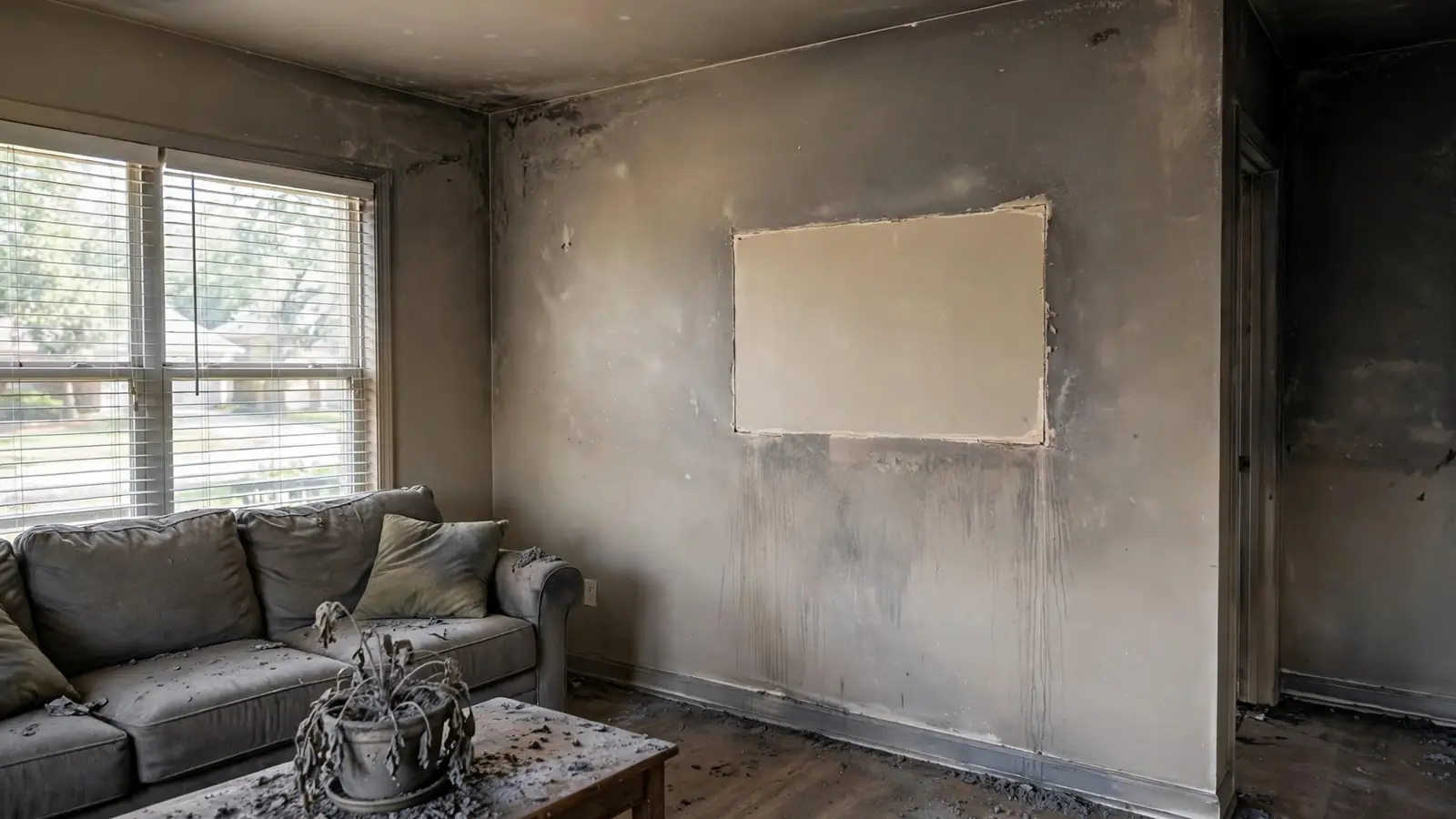
Smoke is the part of a fire that escapes the burning object: superheated gases loaded with microscopic particles and droplets. As it spreads and cools, the particles drop out and coat surfaces, while the gases sink into anything absorbent and leave their smell. Restorers separate this smoke damage from heat damage, where materials actually charred or melted, and from heavy soot, the thick black deposit nearest the fire.
The damage shows up in three ways. There is discoloration, from a faint grey haze on white trim to yellow-brown staining on ceilings. There is odor, which can hang on for months. And there is chemical attack, because smoke residue is often acidic and slowly etches chrome, brass and glass, yellows plastics and stains grout and natural stone.
Time makes each of these worse. Fresh residue sits on the surface; after several days it has started reacting with what it sits on, and stains that would have wiped off now need refinishing or replacement. Getting cleanup started early is one of the few things that reliably limits the scope of a smoke job.
The goal of smoke cleanup is not to make the house smell nicer for a week. It is to find every surface and material the smoke reached, remove the residue or the material, neutralize the odor at its source and seal what remains.
Warning signs
Clues that smoke went further than you think
Walk every room, open every closet and cabinet, and smell close to surfaces.
Shadow lines above doors
Dark bands at the top of door frames show where smoke flowed between rooms.
Rings around supply and return grilles
Smoke moved through the duct system and left residue where air entered or left.
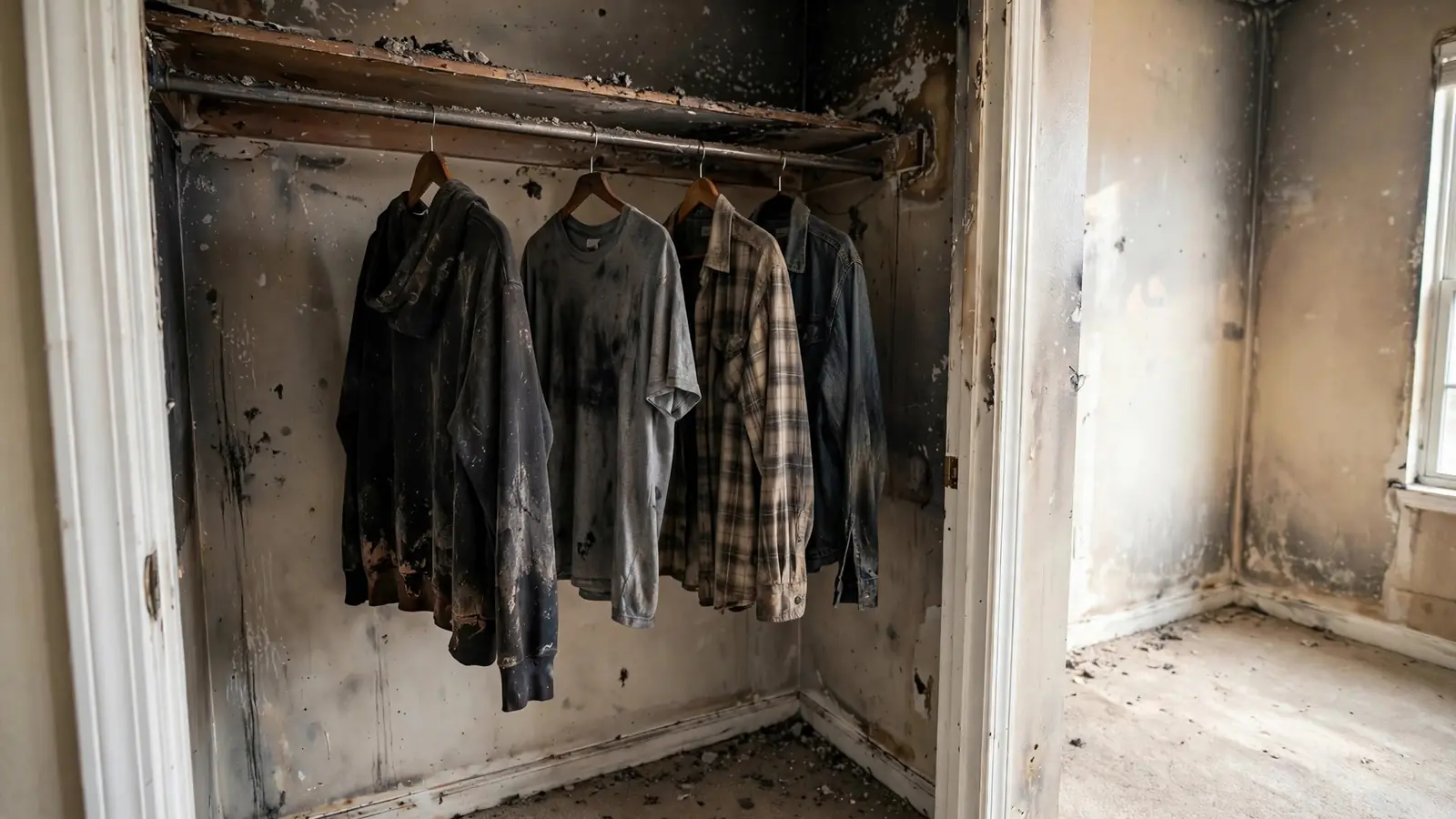
Odor in closed closets and drawers
Smoke under pressure gets into closed spaces; fabrics inside soak it up.
Yellowed switch plates and outlet covers
White plastic shows smoke residue early and clearly.
Film on mirrors and windows in far rooms
A greasy haze on glass means fine particles reached that room.
Smell that jumps when the system starts
Odor that surges when the heat or AC kicks on points to contaminated ducts or the air handler.
What burned matters
Why some fires leave far more smoke behind
A fast, hot fire with plenty of air burns more completely and leaves less residue, though it can push smoke a long way. A slow, smouldering fire, such as a couch cushion, an electrical fire inside a wall, or a garage fire starved of air, produces thick, oily smoke and usually does more damage to the rest of the house.
Modern furnishings contain a lot of synthetic foam and plastic. When these burn they produce dense, sticky smoke that clings to walls and fabrics and carries a sharp chemical smell. Electrical fires add the acrid odor of burned wire insulation. Kitchen fires add burned-fat residue that is thin and almost invisible but smells strongly.
When you call, it helps to say what burned and roughly how long it burned before it was out. Those two details let the contractor estimate how far the smoke travelled and what kind of cleaning it will need before they even arrive.
Assessment
How the smoke path is traced
- 1
Start where it burned
The burn pattern shows how hot and how long the fire was, which predicts smoke volume and type.
- 2
Follow the shadow lines
Residue along ceilings, door heads and openings shows the route smoke took.
- 3
Open the closed spaces
Closets, cabinets, drawers and the attic hatch area are opened and checked.
- 4
Check the HVAC
Filter, return grilles, air handler and reachable duct sections are inspected.
- 5
Test surfaces
Small cleaning tests show which finishes will recover and which need sealing or replacement.
- 6
Document
Photos and notes for each room build the record your insurer will want.
Diagnosis
Smoke clues and what they usually mean
| What you notice | What it suggests | Likely response |
|---|---|---|
| Light haze only near the fire | Short fire, limited spread | Clean the affected rooms |
| Haze and odor in every room | Smoke carried by the HVAC system | Whole-house cleaning plus duct cleaning |
| Strong odor inside cabinets | Smoke forced into closed spaces | Empty, clean and seal cabinet interiors |
| Worse smell on hot afternoons | Odor held in attic insulation or decking | Attic cleanup and sealing |
| Tarnished faucets and hardware | Acidic residue left too long | Specialist cleaning or replacement |
| Smoke smell from the floor | Residue in carpet and pad | Carpet cleaning or replacement |
The process
How a smoke cleanup is organised
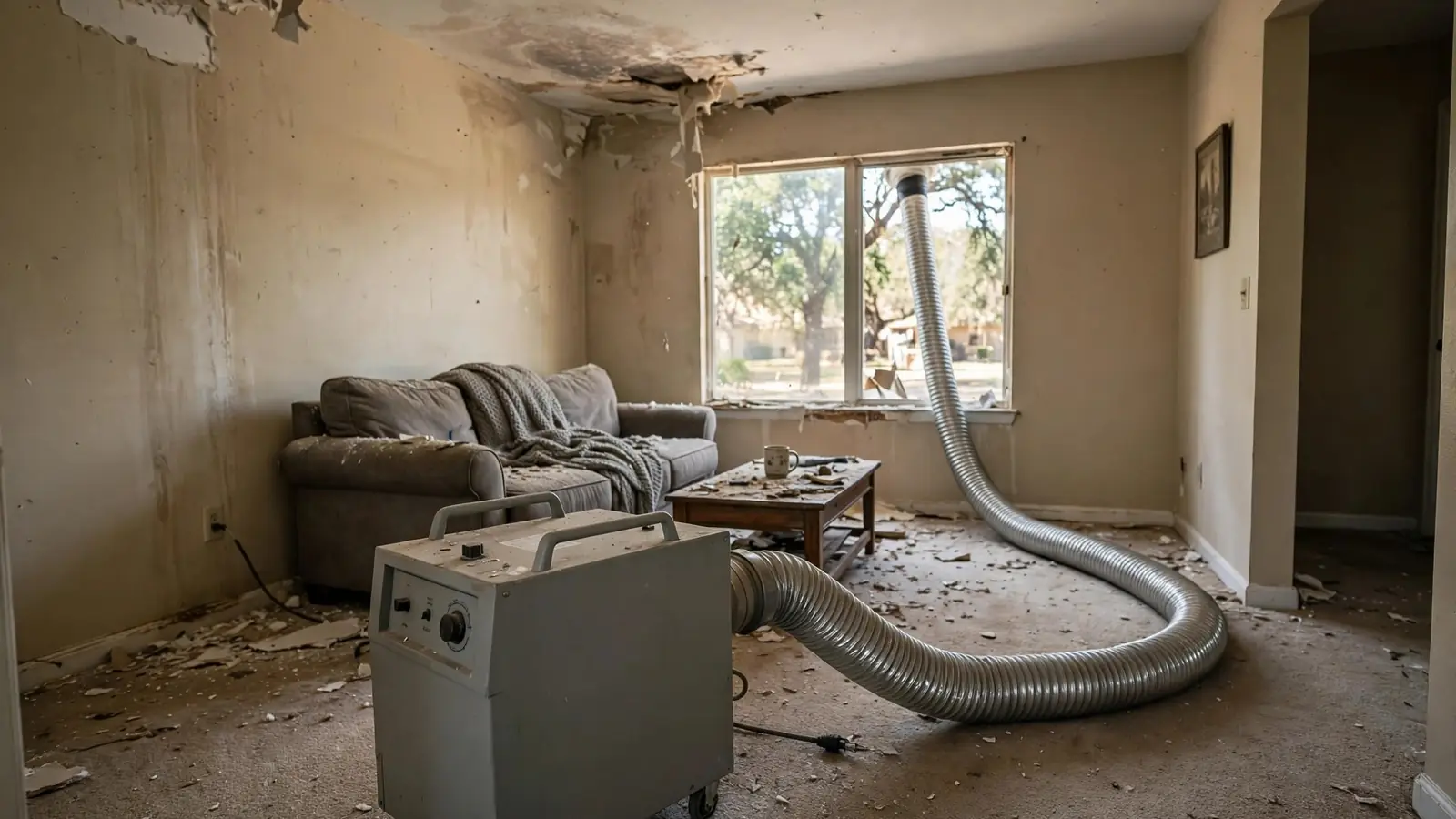
Air comes first. HEPA air scrubbers are set up to capture particles disturbed during the work, protecting the crew and stopping cleaned rooms from being re-soiled. Where outdoor conditions allow, controlled ventilation helps, although Texas heat and pollen often make sealed-room filtration the better choice.
Structure cleaning runs from ceilings to floors. Loose residue comes off with HEPA vacuums and dry sponges; cleaners matched to the residue type follow. Hard surfaces such as tile, glass and metal are cleaned and, where acidic residue has already etched them, polished or replaced.
Contents are sorted into what can be cleaned on site, what goes for specialist off-site cleaning and what cannot be saved. Clothing and linens typically go to cleaners equipped for smoke, furniture is cleaned according to its materials, and electronics are set aside unpowered for inspection. Everything leaving the house is listed, and discarded items are photographed first.
The heating and cooling system is then cleaned if smoke reached it: ducts, registers, the air handler and the coil where accessible, followed by a new filter. Odor treatment and any sealing and painting finish the job.
Contents
How belongings are usually handled
| Item | Usual approach | Tip |
|---|---|---|
| Clothes and bedding | Specialist smoke laundering or dry cleaning | Do not run them through your washer first |
| Sofas and chairs | Cleaning and deodorizing | Foam cushions may need replacing |
| Wood furniture | Cleaning, refinishing if dulled | Act quickly before residue clouds the finish |
| TVs, computers, consoles | Inspection before power-on | Residue can short circuits |
| Dishes and cookware | Hand or ultrasonic cleaning | Throw away exposed food |
| Books and papers | Dry cleaning; freeze if wet | Photograph important documents |
| Rugs and carpet | Cleaning or replacement | Pad is usually replaced if smoky |
Before the crew arrives
Safe things you can do right now
Once the fire department has cleared the house, take photos of every room before moving anything. Turn the thermostat to off, including the fan, and replace the filter. If the outdoor air is clean, open windows for a short time to air out. Throw away food from the pantry and fridge that was exposed to heat or smoke, and bag a few changes of clothes to take to a cleaner who handles smoke.
Skip scented sprays and candles, which add to the residue and mask the problem. Do not rent an ozone machine; ozone irritates lungs and is meant only for trained use in empty buildings [3]. Leave electronics unplugged.
- Photos first
- HVAC off, new filter
- Toss exposed food
- No candles or air fresheners
- No DIY ozone
The visit
What to expect from the first visit
The contractor will want to know where the fire started, how long it burned, whether water was used and whether the HVAC was running. They will walk every room, the garage, and look into the attic if it can be reached safely. If you have an insurance claim number, have it ready; it helps them document the job the way your adjuster expects.
You can ask them to explain as they go: which rooms they think need only cleaning, which may need sealing and painting, and which contents they recommend sending out. A clear contractor will show you residue and explain their reasoning.
Once work begins, ask who your contact is and roughly how the work will be sequenced. Smoke cleanup is disruptive, and many families stay with relatives or in a hotel for part of it.
Arlington specifics
Arlington homes and how smoke moves through them
A large share of Arlington's homes are single-storey brick ranch houses from the 1960s through the 1980s, with a vented attic stretching over the whole floor plan and the HVAC air handler and ductwork up there too. Smoke reaching that attic spreads end to end and drops through ceiling vents, light fixtures and the attic hatch into rooms far from the fire. Newer two-storey homes in south and southwest Arlington add open stairwells and lofts, which carry smoke from a downstairs fire straight to upstairs bedrooms.
North Texas weather changes the job by season. Summer attics get very hot, which drives smoke odor out of insulation and decking into the house in the afternoons. In winter, a gas furnace running during the fire may have pushed smoke through every duct. Spring and early summer bring hail and severe storms that can send rain through a fire-damaged roof, wetting smoky materials and complicating the cleanup.
Garage fires deserve special mention in Arlington, where most houses have attached two-car garages full of vehicles, tools, chemicals and storage. The door from the garage into the utility room or kitchen is the usual route for heavy, oily smoke into the house.
Prevention
Limiting smoke damage if a fire ever happens again
- Working smoke alarms everywhereAlarms in each bedroom, outside sleeping areas and on every level give the early warning that keeps a small fire small.
- A kitchen extinguisherA small stovetop fire put out in seconds leaves little smoke behind.
- Know the thermostat fan switchTurning the system off during a fire stops it pushing smoke through the house.
- Sleep with bedroom doors closedClosed doors slow the spread of smoke and heat between rooms.
- Keep the garage door to the house shutIt is designed as a barrier; it only works when closed.
Keep or discard
Deciding which smoky belongings to keep
For most items, the question is whether professional cleaning will return them to a usable, odor-free state. Hard, non-porous things almost always clean. Porous things depend on how close they were to the fire and how heavy the residue is. Heirlooms and photographs are worth a conversation with the contractor even if they look bad, as specialist cleaning can sometimes recover them.
Safety comes first. Food, medicines and cosmetics exposed to heat or smoke should go. Mattresses and pillows that absorbed heavy smoke are usually replaced. Anything melted or charred is generally not worth cleaning. Keep a list and photos of everything discarded.
Related
Other damage that often travels with smoke
Heavy soot near the fire
Thick deposits close to the source need their own methods.
Read moreOdor that will not leave
Smell that survives cleaning needs treatment at the source.
Read moreWet sheetrock and carpet
Hose water must be dried before cleanup can finish.
Read moreSmoke from a neighbor
A neighbor's fire can leave smoke damage in your home too.
Read more
Older Arlington homes
Smoke in a pier-and-beam house
Some older homes in central and downtown Arlington sit on pier-and-beam foundations with a crawlspace below the floor. Smoke finds its way into that space through floor registers, plumbing openings and gaps around the edges of the floor, and it leaves residue on the underside of the subfloor, on joists and on any ductwork running under the house.
Crawlspace residue is easy to miss and keeps releasing odor upward through the floor. A thorough smoke job in these homes includes a look underneath, cleaning or sealing of affected surfaces, and checking ducts that run below the floor. Crawlspace work also brings its own safety concerns, including tight access and the chance of old insulation or debris, so it is a job for the crew rather than the homeowner.
Paperwork
Keeping a smoke job on track with your insurer
Smoke damage claims often grow as more rooms are inspected, which can surprise both homeowners and adjusters. Clear records help. Ask the contractor for photos of every affected room before and after cleaning, notes of which surfaces were cleaned, sealed or replaced, and an inventory of contents sent out, cleaned and returned or discarded.
Point out rooms with light smoke film to the adjuster during the inspection; they are easy to overlook next to the burned area. If you notice odor returning after cleaning, report it promptly so it can be addressed as part of the same claim rather than as a new problem later.
Many Texas homeowner policies also include coverage for additional living expenses if the house cannot be lived in during cleanup. Keep receipts for hotels, meals and other added spending, and ask your adjuster what the policy allows.
Sequence
Typical order of work on a smoke job
| Stage | Main tasks |
|---|---|
| First visit | Walk-through, photos, containment, air scrubbers set up |
| Early days | Water removal if hoses were used; contents sorted and packed out |
| Cleaning | Ceilings to floors, room by room, dry then wet methods |
| Systems | Duct, coil and air handler cleaning; filter replaced |
| Odor | Deodorizing treatments where needed |
| Finishing | Sealing, painting, contents returned |
Upstairs smoke
Two-storey homes in south and southwest Arlington
Newer neighborhoods toward Mansfield and around Rush Creek have many two-storey homes with open entries, stairwells and game rooms or lofts upstairs. Those open designs act like chimneys during a fire. Smoke from a kitchen or living room fire rises quickly to the upper floor and collects in bedrooms, closets and the bonus room, which can end up more heavily affected than rooms on the ground floor next to the fire.
Cleanup in these homes usually treats the upper floor as a priority, along with the attic above it. Ceiling fans and light fixtures high in two-storey family rooms collect residue that is hard to reach and needs scaffolding or tall ladders. If firefighting water was used upstairs, the ceiling below may also need opening and drying before smoke cleaning can be finished.
FAQ
Smoke damage questions from Arlington homeowners
How far does smoke travel inside a house?
Often through the whole house. It moves under pressure through door gaps, wall cavities, the attic and the ductwork, and settles on cooler surfaces far from the fire.
Can a fire next door cause smoke damage in my home?
Yes. Smoke can enter through windows, attic vents and gaps around doors and leave residue and odor, even if your house was never in danger.
Should I run my AC to clear the smoke?
Not until the system has been checked. A contaminated system spreads residue and odor to rooms that were clean.
Do air fresheners get rid of smoke smell?
No. They cover it briefly. The odor comes from residue in porous materials and has to be removed or sealed.
Is it safe to stay in a smoke-damaged house?
That depends on the damage and your health. The fire department decides whether the house can be entered; sensitive people should avoid smoky rooms until they are cleaned.
Can smoke ruin electronics?
It can. Residue can be acidic and conductive, causing corrosion and shorts. Leave devices unplugged until inspected.
What is the difference between smoke damage and soot?
Soot is heavier carbon residue near the fire. Smoke damage covers the lighter film, staining and odor spread through the house.
Does homeowners insurance in Texas cover smoke damage?
Many policies cover smoke from a covered fire, but policies differ. The Texas Department of Insurance explains policy types; check yours and talk with your adjuster [4].
Will cleaning crews need to come back?
Often, yes. Smoke jobs are staged: cleaning, drying, odor treatment and painting may happen on different days, and a final check confirms nothing was missed.
Do I need to empty every closet?
Usually only closets that took smoke. The contractor will check each one and recommend which contents should be cleaned.
Why is my upstairs smokier than downstairs?
Smoke rises. In homes with open stairwells and lofts it moves quickly to the upper floor and collects there, even if the fire was downstairs.
Can smoke damage show up days later?
Yes. Acidic residue can keep yellowing plastics and tarnishing metal for days, and odor often becomes more noticeable as the weather warms. Report anything new to your contractor.
Do window screens and blinds need cleaning?
Usually. Screens, blinds and window tracks collect smoke residue and are cleaned or replaced as part of a thorough job.
Should I wash smoky walls before the crew comes?
No. Wiping with water usually smears residue into the paint. Leave walls for the crew, who start with dry methods.
Are light fixtures cleaned too?
Yes. Fixtures, bulbs and ceiling fan blades collect residue on top and are cleaned or replaced so they do not shed soot later.