
Key facts: Kitchen grease fire cleanup
- Cooking is a leading cause of home fires in the United States [1].
- Burned food and fat leave a thin, sticky residue with a strong, lasting odor.
- Never put water on a grease fire; smother it with a lid and turn off the heat [1].
- Grease residue usually needs degreasing cleaners before any deodorizing works.
The residue
What a grease fire leaves behind
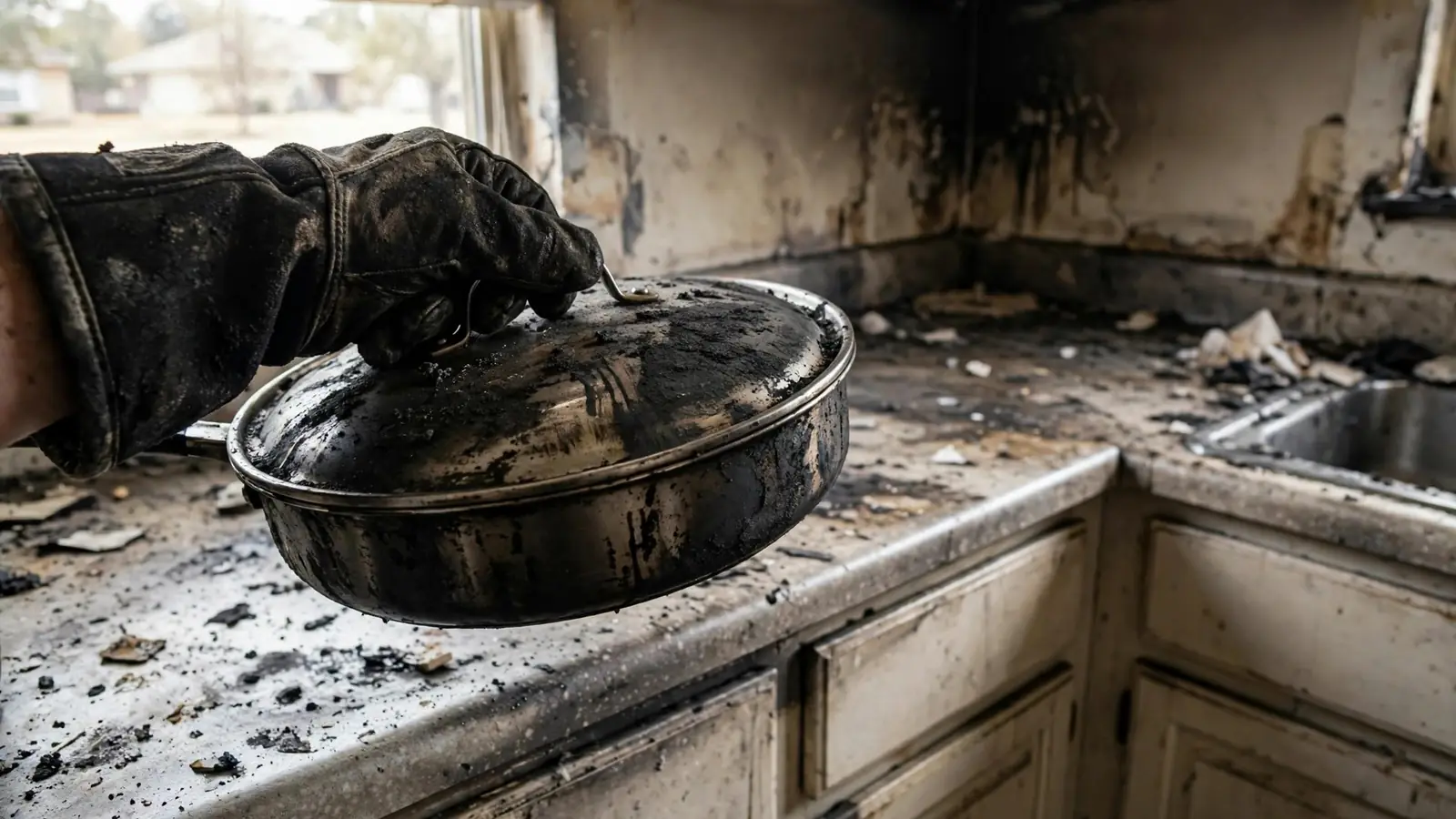
When cooking oil overheats it smokes, and if it catches fire the flames can climb into the range hood and cabinets in seconds. Even a fire that is smothered quickly fills the kitchen with smoke made of burned fat and food. That smoke condenses on cool surfaces as a thin yellow-brown film that is greasy to the touch and difficult to see on light colours.
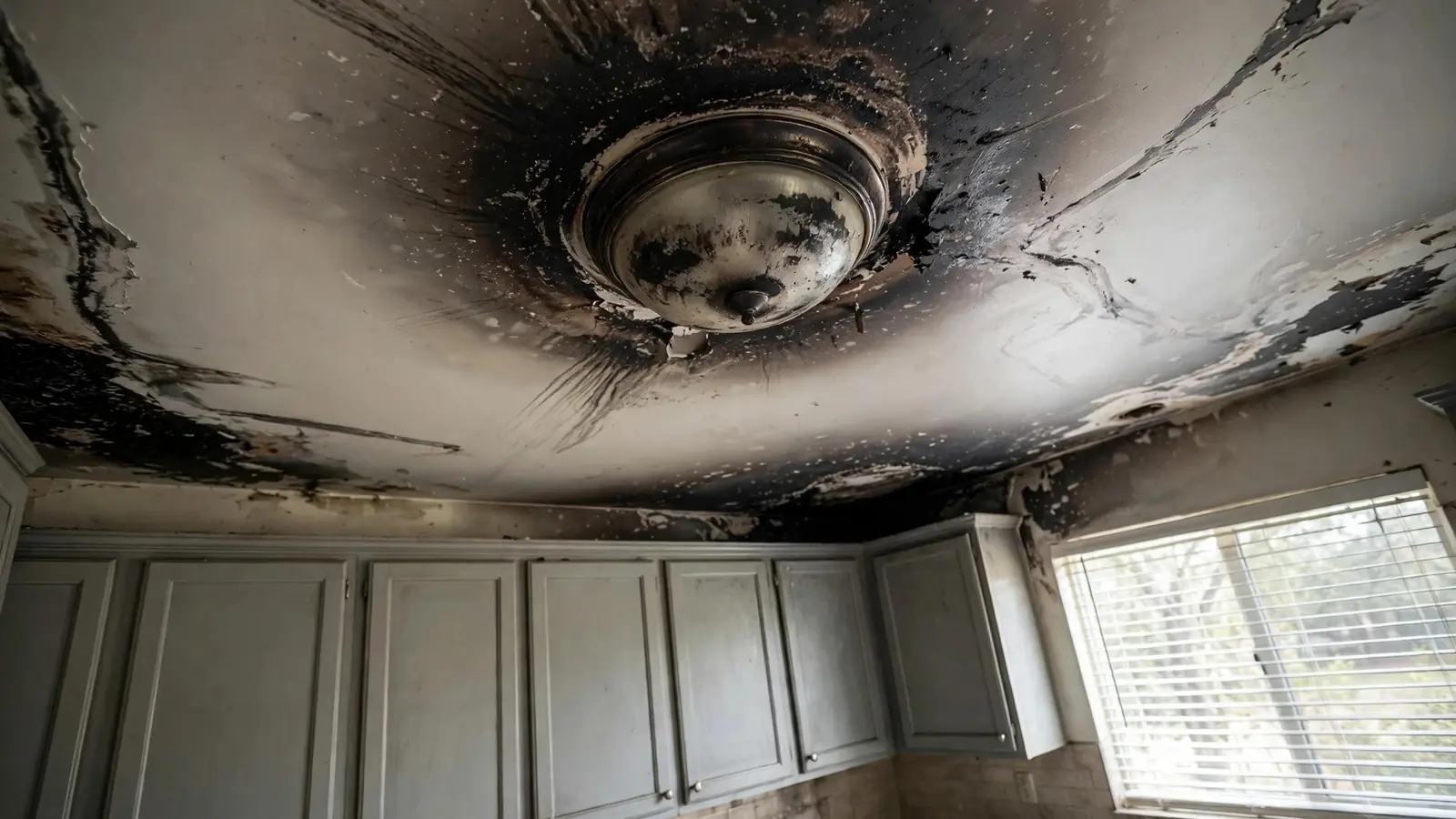
The film is the problem. It coats cabinet faces and tops, walls, ceilings, light fixtures, window coverings and anything else in the open kitchen and family area. It carries a sharp, sour smell that clings to fabrics and can spread throughout the house, especially if the air conditioning or heat was running.
Ordinary all-purpose cleaners smear it around. It needs degreasing products and patient work, and odor treatment only succeeds once the film is gone.
First steps
Right after the fire
- 1
Make sure it is out
If the fire department came, wait for their all-clear. If you put it out yourself, leave the lid on until the pan is cool.
- 2
Turn off the stove and the HVAC
Stop the system spreading residue; replace the filter later.
- 3
Ventilate if outside air is clean
Open windows and run the hood fan only if it was not damaged.
- 4
Throw away exposed food
Anything open or near the stove should go.
- 5
Photograph the damage
Before cleaning, for your records and any claim.
Small fires
What you can reasonably clean yourself
For a small stovetop fire with limited smoke, homeowners can often clean the kitchen themselves. Wear gloves. Start high and work down. Use a degreasing cleaner suited to each surface, wipe with clean cloths changed often, and rinse. Clean cabinet tops, the range hood exterior, the backsplash and the ceiling around the stove.
Replace the range hood filters. Clean or replace the drip pans and grates. Wash curtains and dish towels separately. If after a thorough clean the kitchen still smells strongly, or if you find film in rooms well away from the kitchen, the job is bigger than it looked.
Decision
When to call for help
| Situation | Suggested approach |
|---|---|
| Small stovetop flare, little smoke | DIY cleaning with degreaser |
| Flames reached the hood or cabinets | Professional assessment |
| Smoke film in other rooms | Professional smoke cleanup |
| Smell remains after cleaning | Professional odor treatment |
| Fire department used water or extinguisher | Professional cleanup and drying |
Damaged items
Range hoods, microwaves and cabinets
If flames reached the range hood, its fan, wiring and duct may be damaged and full of grease; it is usually replaced. Many homes have an over-the-range microwave instead of a hood, and these rarely survive a fire beneath them. Cabinets above the stove may be scorched, warped or blistered. Solid wood faces sometimes refinish; particleboard boxes that took heat or extinguisher residue are often replaced.
Dry chemical extinguisher powder is fine and corrosive and spreads widely. If an extinguisher was used, everything nearby needs careful cleaning, and electronics in the kitchen should be checked.
Local notes
Arlington kitchens and grease smell
Many Arlington homes from the 1980s onward have kitchens open to the family room, so grease smoke spreads into upholstery, curtains and carpet there too. In summer, attic heat can drive any residue that reached the attic back into the house. If the smell lingers on hot afternoons, the attic and ducts may need attention.
Beyond the kitchen
Cleaning the rest of the house after a kitchen fire
Because grease smoke travels, rooms near the kitchen often need attention too. Check the family room and dining area for a sticky film on walls, light fixtures and the tops of picture frames. Smell curtains, sofa cushions and rugs. Look at the return-air grille closest to the kitchen; if it is dark, residue may have entered the duct system.
Fabrics usually need laundering or professional cleaning. Hard surfaces need the same degreasing approach as the kitchen. If the HVAC was running, have the ducts and air handler checked before using the system regularly.
Step by step
A practical cleaning order for a small grease fire
- 1
Ceiling and light fixtures
Start at the top so drips land on surfaces not yet cleaned.
- 2
Cabinet tops and upper cabinets
Grease collects heavily on top of cabinets.
- 3
Walls and backsplash
Degreaser, clean cloths, rinse.
- 4
Range hood and microwave exterior
Replace hood filters.
- 5
Lower cabinets and appliances
Fronts, handles and sides.
- 6
Floors last
Mop with a degreasing cleaner, then rinse.
Prevention
Preventing the next one
The NFPA points out that unattended cooking is a leading factor in home cooking fires. Stay in the kitchen when frying, grilling or broiling, keep a lid within reach, and keep towels and packaging away from burners. Clean grease build-up from the range hood and filters regularly so a small flare-up does not spread into them.
FAQ
Grease fire cleanup questions
Why does my whole house smell after a small kitchen fire?
Burned-food smoke spreads quickly and the residue clings to fabrics and surfaces throughout open-plan homes.
Can I paint over grease stains?
Not without degreasing and a stain-blocking primer first; otherwise the stain and smell return.
Is extinguisher powder harmful?
It irritates skin, eyes and lungs and is corrosive to metal and electronics. Clean it up thoroughly with protection.
Do I need a new range hood?
If flames reached it, usually yes. The fan, wiring and duct may be damaged.
Can I use the stove again after a grease fire?
If the stove and its wiring or gas connection were not damaged, usually yes after cleaning. If flames reached the controls or wiring, have it checked first.
Do I need to clean inside my cabinets?
If doors were open or the fire was large, yes. Smoke gets inside, and dishes and food containers there may need washing.
What degreaser should I use?
Choose one suited to each surface and test it in a hidden spot first, especially on painted or wood cabinets.
Will the smell fade on its own?
Light odor may fade once surfaces are degreased, but residue left in fabrics or ducts keeps releasing smell until cleaned.