
Key facts: Odor Removal
- Lingering smoke odor comes from residue absorbed into porous materials, so the source has to be cleaned, removed or sealed.
- Heat releases odor compounds faster, which is why smoke smell often peaks on hot Texas afternoons.
- Scented products cover smoke odor temporarily but do not remove it.
- The EPA warns that ozone generators can produce harmful indoor ozone levels [1].
- Stain- and odor-blocking primers are commonly applied after cleaning to lock in remaining traces.
Where odor lives
Why the house still smells after it looks clean
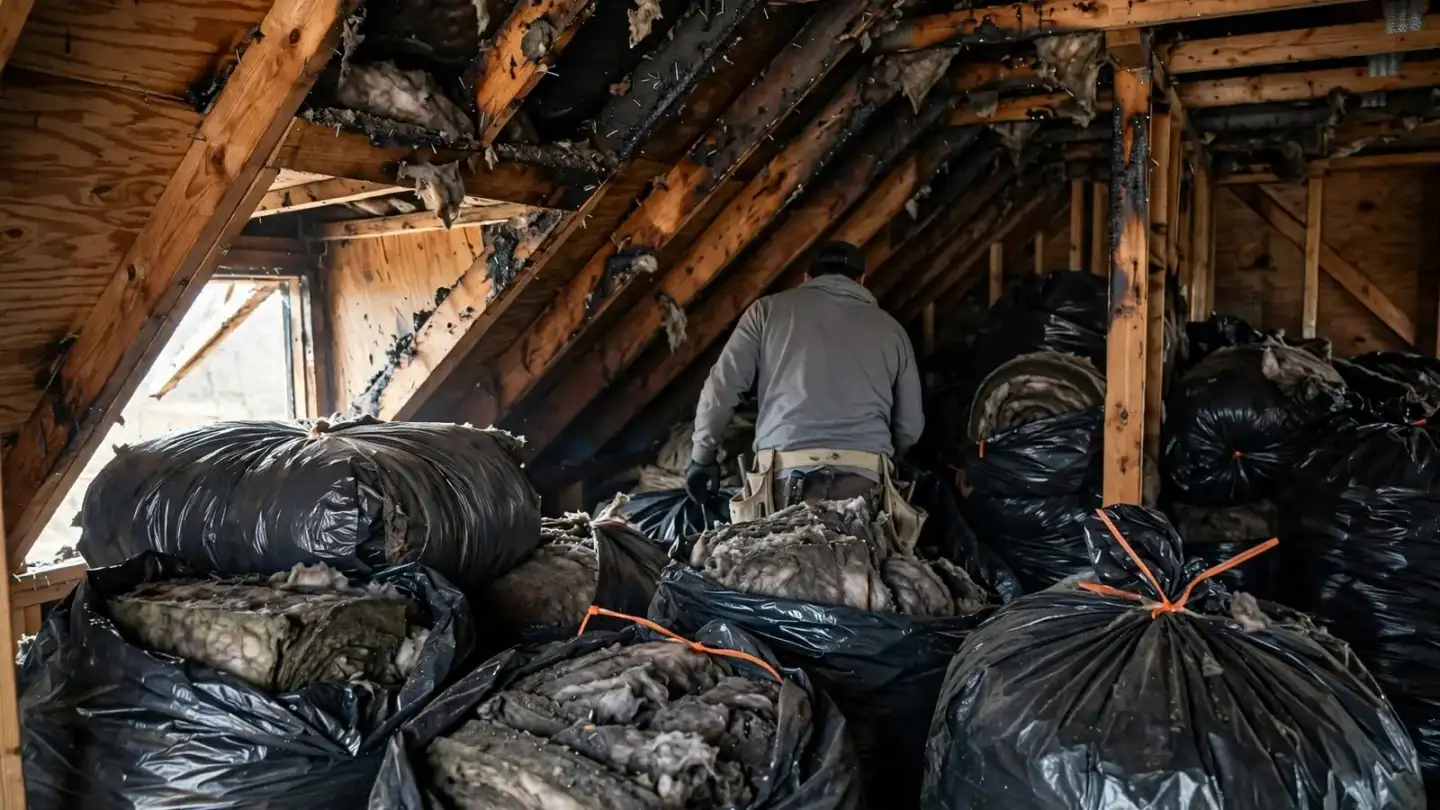
Burning materials release a wide range of chemical compounds. Some ride on particles that settle as residue; others are gases that soak straight into absorbent materials. Cleaning removes residue from surfaces, but it does nothing for the compounds that have soaked into the paper face of sheetrock, the fibers of carpet and pad, the foam in a sofa, the wood of cabinet boxes or the loose-fill insulation in the attic.
Those materials give the odor back slowly. As they warm, they release more. That is why many Arlington homeowners say the smell seems to come and go: it is faint on a cool morning and strong by late afternoon, especially in summer and in rooms under the attic or along west-facing walls.
Effective odor removal works in layers: clean the residue, remove materials that hold too much odor to clean, treat what remains with deodorizing methods that reach the same pores the smoke did, and seal surfaces so leftover traces cannot escape.
Skipping any layer usually means the smell returns. Fogging a house that still has smoky insulation in the attic, for instance, may help for a few weeks and then fade.
Finding the source
Where to sniff when the smell will not quit
Come in from outside so your nose is fresh, then work room by room.
At the attic hatch and ceiling lights
Stronger smell here points to smoky insulation or roof decking above.
At the vents when the system starts
A surge of odor means the ducts, coil or air handler are holding residue.
Low to the floor
Carpet pad and subfloor hold odor, especially if hose water soaked them.
Inside lower cabinets
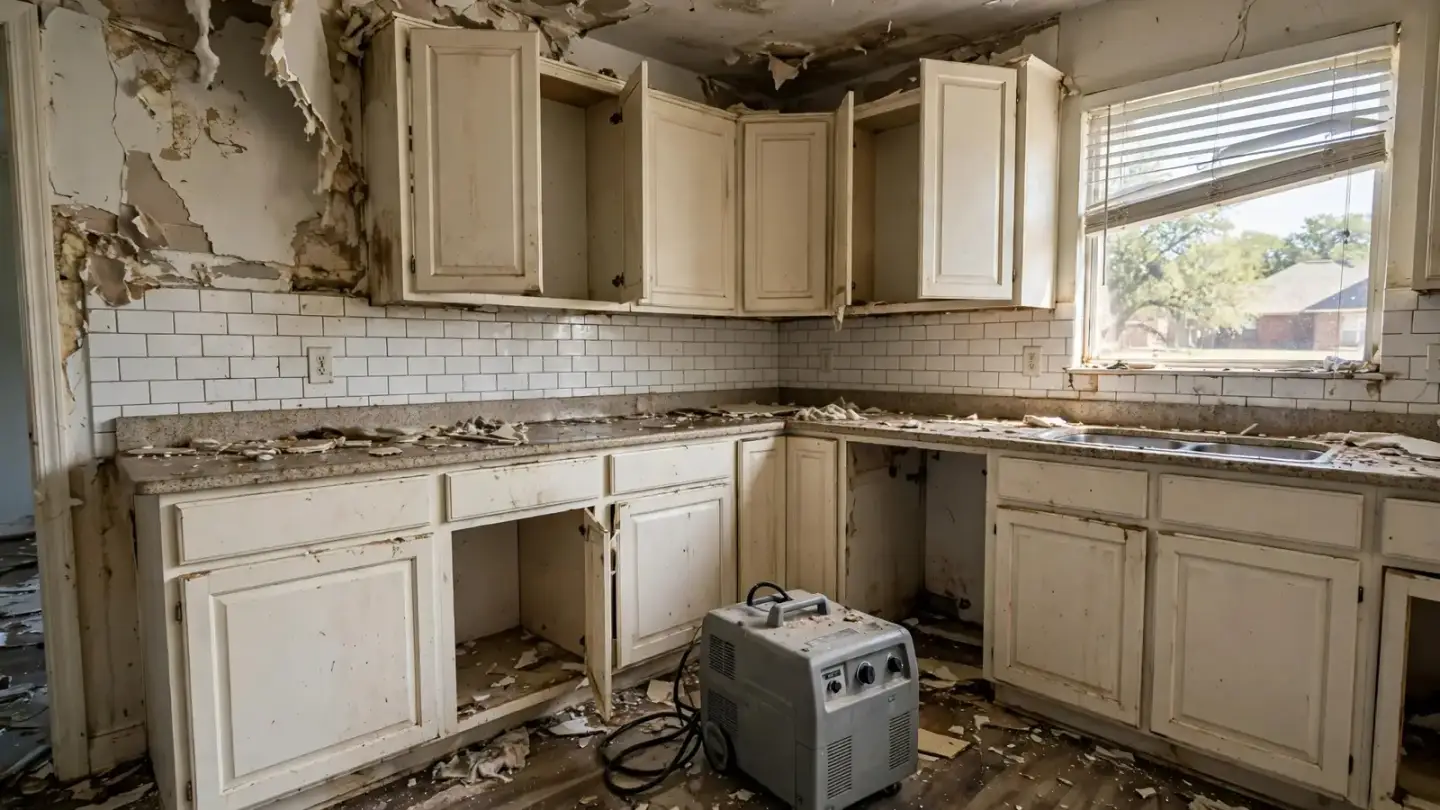
Raw particleboard and plywood inside cabinets absorb smoke readily.
Inside closets
Clothes, linens and stored boxes act like filters for smoke.
In upholstered furniture
Foam cushions and mattresses trap odor deep inside.
What does not work
Why sprays, candles and rental machines disappoint
Fragrance products put a stronger smell on top of the smoke. They wear off within hours and add their own residue. Bowls of baking soda or coffee grounds absorb a little from the air but cannot reach odor buried in walls and insulation. Ordinary paint does not block odor; smell bleeds through new paint within weeks, particularly in heat.
Ozone generators are a common rental for smoke smell. Ozone can break down some odor compounds, but it is a lung irritant and the EPA warns that ozone generators sold as air cleaners can reach harmful levels indoors [1]. It also does nothing about the residue causing the smell and can damage rubber and some fabrics with heavy use. Where professionals use ozone at all, it is in empty, controlled conditions.
Investigation
How a contractor tracks down odor
- 1
Closed-house check
The house is closed up for a while so odor builds, then each room is compared.
- 2
Open everything
Closets, cabinets, drawers, the attic hatch and spaces behind appliances are checked.
- 3
Run the system
If it is safe, the HVAC is run briefly with a clean filter to test the ducts.
- 4
Moisture check
Wet materials smell worse and can grow mould, so meters look for damp spots.
- 5
Rank the sources
The strongest sources are dealt with first, often by removal rather than treatment.
Diagnosis
Matching odor patterns to their sources
| Pattern | Likely source | Usual fix |
|---|---|---|
| Worst on hot afternoons | Attic insulation and roof decking | Remove insulation, clean and seal wood |
| Surges when heat or AC starts | Ducts, coil, air handler | Duct cleaning or replacement, new filter |
| Strongest near the floor | Carpet pad, subfloor | Replace pad, clean and seal subfloor |
| Inside kitchen and bath cabinets | Unsealed cabinet boxes | Clean and seal interiors |
| One bedroom only | Mattress, closet contents | Clean or replace soft items |
| Smoke plus a musty note | Wet materials from firefighting | Dry or remove the wet materials |
The process
How professional odor removal is done
Cleaning comes first, because deodorizers cannot work through a layer of residue. Every surface the smoke reached is cleaned with methods matched to the residue. In lightly affected rooms, this alone removes most of the smell.
Next, materials that hold too much odor are taken out: often attic insulation above the fire, carpet pad, sometimes sheetrock that took heavy smoke, and soft furnishings that cannot be cleaned. Removing a source is almost always more reliable than treating it in place.
Then the remaining odor is neutralized. Thermal fogging releases a fine deodorizing mist that reaches the same pores smoke did; the house must be empty during treatment. Hydroxyl generators produce short-lived reactive molecules that break down odor compounds more slowly and are generally used with occupants nearby. Air scrubbers with activated carbon pull odor from the air during the work.
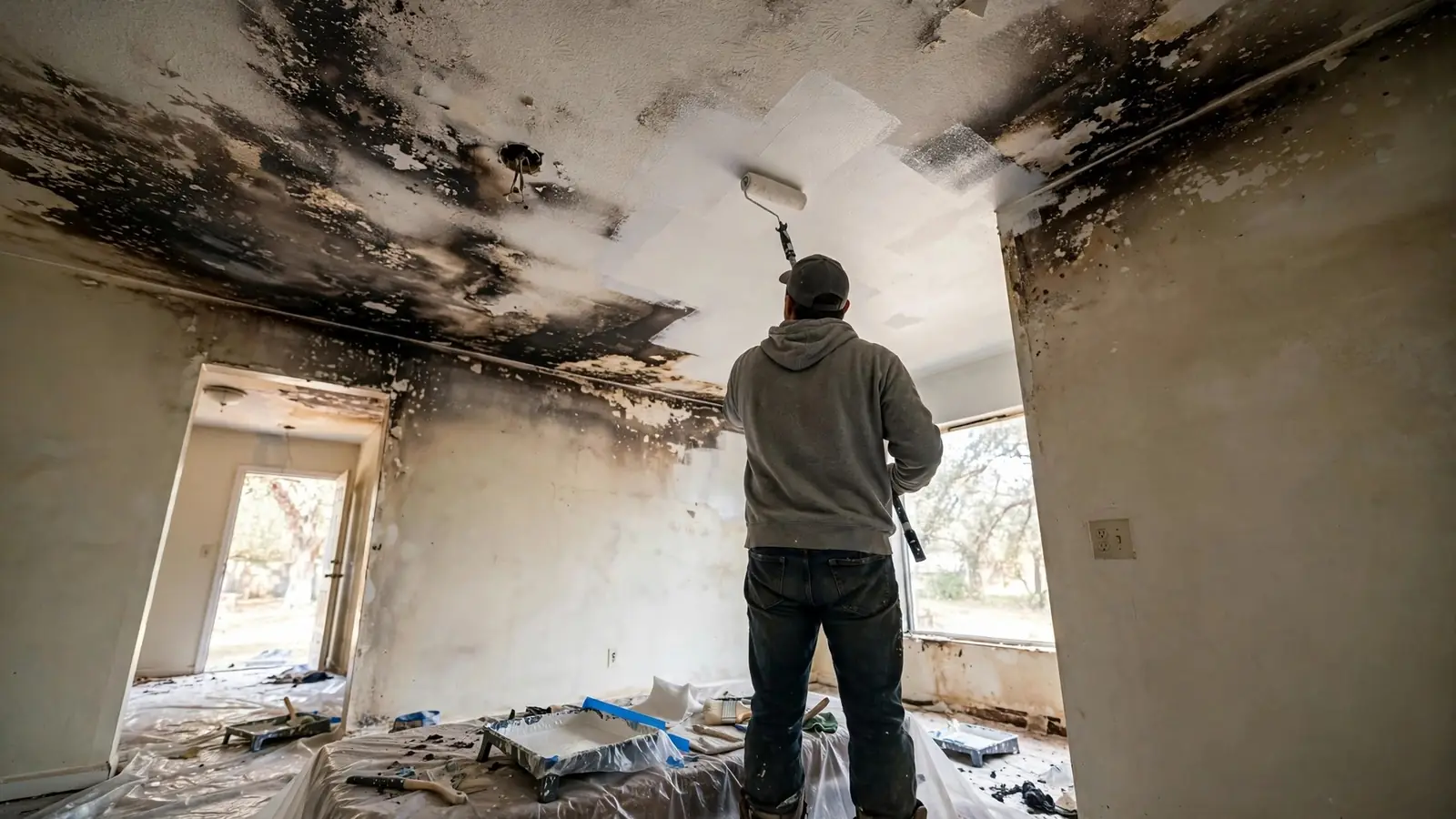
Finally, surfaces that may still hold traces are sealed with odor-blocking primers before painting or new flooring: ceilings, walls, cabinet interiors, subfloors and exposed framing. Ducts are cleaned or replaced and a fresh filter goes in.
Tools
Deodorizing methods side by side
| Method | How it works | Things to know |
|---|---|---|
| Cleaning | Removes the residue releasing odor | Always the first step |
| Source removal | Takes out materials holding odor | Best for insulation and pad |
| Thermal fogging | Fine deodorizing mist penetrates pores | House must be empty |
| Hydroxyl generators | Reactive molecules break down odor | Slower; generally used with people nearby |
| Ozone | Oxidizing gas | Lung irritant; empty buildings only |
| Activated carbon | Absorbs odor from air | Helps air, not materials |
| Sealing primer | Locks traces into surfaces | After cleaning, before paint |
In the meantime
Steps worth taking yourself
Move obviously smoky soft items, such as cushions, throws and bedding, out of the rooms you use. Replace the HVAC filter and leave the system off until it has been checked. A portable purifier with a HEPA and carbon filter helps in a bedroom. Open windows when outdoor air is clean and cool, usually early morning in an Arlington summer.
Hold off on painting, new carpet and DIY ozone until the sources have been dealt with, or the smell will come back through the new finishes.
- Bag smoky soft items
- New filter, HVAC off
- HEPA and carbon purifier
- Ventilate in cool hours
- No paint or carpet yet
The visit
What an odor removal visit involves
Much of the first visit is investigation: lifting a carpet corner, opening every cabinet, checking the attic and the air handler. Expect questions about when the smell is strongest and whether it changes when the heat or AC runs.
Some treatments require an empty house, including pets and plants, for several hours. Ask how long you will need to be out and how the house will be aired before you return. Ask too how success will be judged. In North Texas, a fair test is a closed house on a hot afternoon; if it smells clean then, the sources have been dealt with.
Arlington specifics
Smoke odor in North Texas heat
Attics in Arlington regularly reach far higher temperatures than the living space from late spring through early autumn. Smoke absorbed into loose-fill insulation, roof decking and rafters releases strongly in that heat and drifts down through ceiling vents, can lights and the attic hatch. Many odor complaints that hang on for months trace back to the attic.
Most Arlington homes have the air handler and ductwork in that same attic. Flexible ducts with a plastic outer jacket and fiberglass insulation can hold smoke odor and are often replaced rather than cleaned after significant exposure.
Humidity also matters. North Texas summers are warm and often humid, and spring brings heavy rain. Damp materials hold and release odor differently and can grow mould, which adds a musty note to smoke smell. Drying wet materials is part of odor control.
Prevention
Keeping the house smelling clean afterwards
- Change filters more often for a few monthsFrequent changes catch residual particles still working loose.
- Watch for afternoon smellIf smoke odor returns on hot days, call the contractor back; a source may have been missed.
- Keep humidity downRun the AC and fix leaks promptly so damp does not add a musty smell.
- No indoor smokingTobacco smoke collects in the same materials and is easily mistaken for fire odor.
Treat or replace
When smelly materials have to go
Hard and sealed surfaces almost always come clean. Painted sheetrock usually cleans and seals well unless heavily exposed. Insulation, carpet pad, foam cushions and mattresses are often replaced because they hold odor deep inside.
If a treated item still smells on a hot day after professional work, replacement is usually the more reliable choice. A contractor should explain each decision and record removed items for your claim.
Related
Problems that come with smoke odor
Visible soot
Odor work cannot finish until soot is cleaned.
Read moreSmoke in many rooms
Odor in many rooms usually means smoke moved through the ducts.
Read moreWet materials
Damp materials add musty odor and must be dried.
Read moreGrease fire smell
Burned-food odor needs its own cleaning approach.
Read more
Types of smoke smell
Grease, plastic and electrical odors each need a different approach
Not all smoke smells the same, and not all respond to the same treatment. Burned food from a stovetop fire leaves a thin, greasy film with a sour, lingering smell that sits on every surface the smoke reached. It needs cleaners designed to break down protein and fat residue before any deodorizing will work.
Burning plastics, foam and synthetic fabrics produce a heavy, oily residue with a sharp chemical edge. Electrical fires add the acrid smell of burned wire insulation, often concentrated inside walls along the circuit. Wood and paper fires give a drier, more familiar campfire smell that is usually the easiest to clear.
Telling the contractor what burned helps them choose the right cleaning products and treatments from the start, rather than trying a general deodorizer that only partly works.
HVAC
Odor in Arlington ductwork and air handlers
The air handler and ducts are among the most important odor sources to address, because they touch every room. If the system was running during the fire, or if smoke reached the attic where most Arlington air handlers sit, residue can coat the inside of the ducts, the blower and the evaporator coil.
Metal duct trunks and sheet-metal branches can usually be cleaned with brushing and HEPA vacuuming. Flexible ducts, common in North Texas homes, have a corrugated inner liner that holds residue and is difficult to clean thoroughly; heavily affected flex duct is often replaced. The coil and blower may need specialist cleaning by an HVAC technician.
After duct work, a new filter goes in and the system is run while the crew checks each register for odor. If the system still smells, a remaining source upstream, such as a dirty coil or a section of duct that was missed, needs attention.
How the work is staged
Room-by-room odor treatment plan
- 1
Strongest source first
The room or space with the heaviest smell is cleaned and its sources removed before anything else.
- 2
Contents out
Soft goods that hold odor are removed so they do not re-contaminate treated rooms.
- 3
Clean every surface
Ceilings, walls, trim, floors and cabinet interiors are cleaned with residue-appropriate products.
- 4
Treat
Fogging or hydroxyl treatment reaches remaining traces in pores and gaps.
- 5
Seal
Odor-blocking primer goes on before paint, flooring or reinstallation.
- 6
Check
The house is closed up and checked on a warm day before the job is called finished.
Beyond the house
Odor in cars, garages and storage
If the fire involved an attached garage, vehicles parked there probably absorbed smoke through their vents and door seals. Car interiors need their own cleaning, including the cabin air filter. Items stored in the garage, such as camping gear, holiday decorations and sports equipment, often carry heavy odor and are worth sorting before they are brought back into the house.
Smoke can also reach storage sheds and detached workshops if they were close to the fire. Treat these spaces as part of the job so that smoky items do not end up back in a freshly cleaned home.
Floors
Carpet, pad and subfloor odor
Floors are a common hidden source. Carpet fibers catch residue as smoke settles, and the pad underneath soaks up odor and any firefighting water that reached it. Once the pad is smoky, cleaning the carpet surface rarely solves the problem; the smell rises through it again as the room warms.
Contractors typically lift the carpet in affected rooms, remove and discard the pad, clean the carpet if it is worth keeping, and inspect the subfloor. Wood or concrete subfloors that absorbed smoke or water are cleaned, dried and, where odor remains, sealed with an odor-blocking product before new pad goes down. Tile and laminate floors are cleaned, with grout lines given extra attention because they hold residue.
Soft furnishings
Furniture and mattresses after smoke
Upholstered furniture holds odor in its fabric, padding and foam core. Light exposure can often be treated with professional upholstery cleaning and deodorizing. Pieces that sat close to the fire or in heavy smoke for a long time usually keep releasing smell from the foam even after the surface is clean.
Mattresses and pillows are generally replaced after significant smoke exposure, both for odor and for hygiene. Ask the contractor which pieces they think will respond to cleaning and which are better replaced, and keep the list for your insurance claim.
FAQ
Arlington smoke odor questions
How long does smoke smell last after a house fire?
Untreated, it can last months or years because it is held in porous materials. Removing the source and sealing what remains is what ends it.
Why does the smell come back on hot days?
Heat speeds up the release of odor compounds. In Arlington, attic heat drives smell from insulation and decking into the rooms below.
Is ozone safe for smoke odor?
The EPA warns ozone generators can create harmful indoor levels. If ozone is used at all, it should be by trained crews in an empty house.
Can I just paint over the smell?
Not with ordinary paint. Surfaces need cleaning and an odor-blocking primer first.
Do my ducts need replacing?
Sometimes. Metal ducts usually clean well; flexible ducts that took heavy smoke are often replaced.
What is thermal fogging?
A treatment that releases a fine heated deodorizing mist so it reaches the same pores smoke did. Everyone, including pets, must be out.
Can smoky clothes be saved?
Usually, with cleaning designed for smoke. Items that still smell after professional cleaning may need replacing.
How do I know the odor is really gone?
Close the house on a hot afternoon. If it smells clean, the sources have been handled.
Why does my car smell like smoke after the garage fire?
Smoke entered through the vents and door seals. The cabin, carpets and cabin air filter need cleaning, ideally by someone experienced with smoke.
Do I need an HVAC technician as well as a restoration contractor?
Sometimes. Restoration crews clean ducts, but the coil and blower may need an HVAC technician, especially if heat damaged components.
Can a smoky sofa be saved?
Sometimes. Light smoke often responds to professional cleaning. Heavy exposure usually leaves odor in the foam, and replacement is more reliable.
Should I throw out smoky pillows?
Usually yes. Pillows and mattresses hold odor deep inside and are generally replaced after heavy smoke.
Will opening windows get rid of smoke smell?
Ventilation helps with odor in the air, but smell held in insulation, carpet pad and cabinets keeps coming back until those sources are cleaned, removed or sealed.
Why does the smell seem worse after it rains?
Humidity changes how materials release odor, and damp materials can add a musty note. A smell that worsens after rain may also mean a roof opening is letting water in.
Can my pets stay home during odor treatment?
Not during fogging or any ozone use. Remove pets, including birds and fish tanks, and follow the contractor's instructions before bringing them back.
How do I check my attic for smoke odor safely?
Stand on a ladder at the hatch and smell without climbing in. If the smell is strong there, leave the attic inspection to the contractor, who has the right protection and footing.
Can smoke odor affect my health?
The smell itself is mostly a nuisance, but it signals residue that may still release fine particles. People with asthma or heart and lung conditions should limit time in smoky rooms.
Does bleach remove smoke smell?
No. Bleach does not break down smoke residue and adds harsh fumes of its own. Cleaning with appropriate products and sealing are what work.
Does vinegar help with smoke smell?
Bowls of vinegar absorb a little odor from the air but cannot reach smell held in walls, insulation or furniture.