
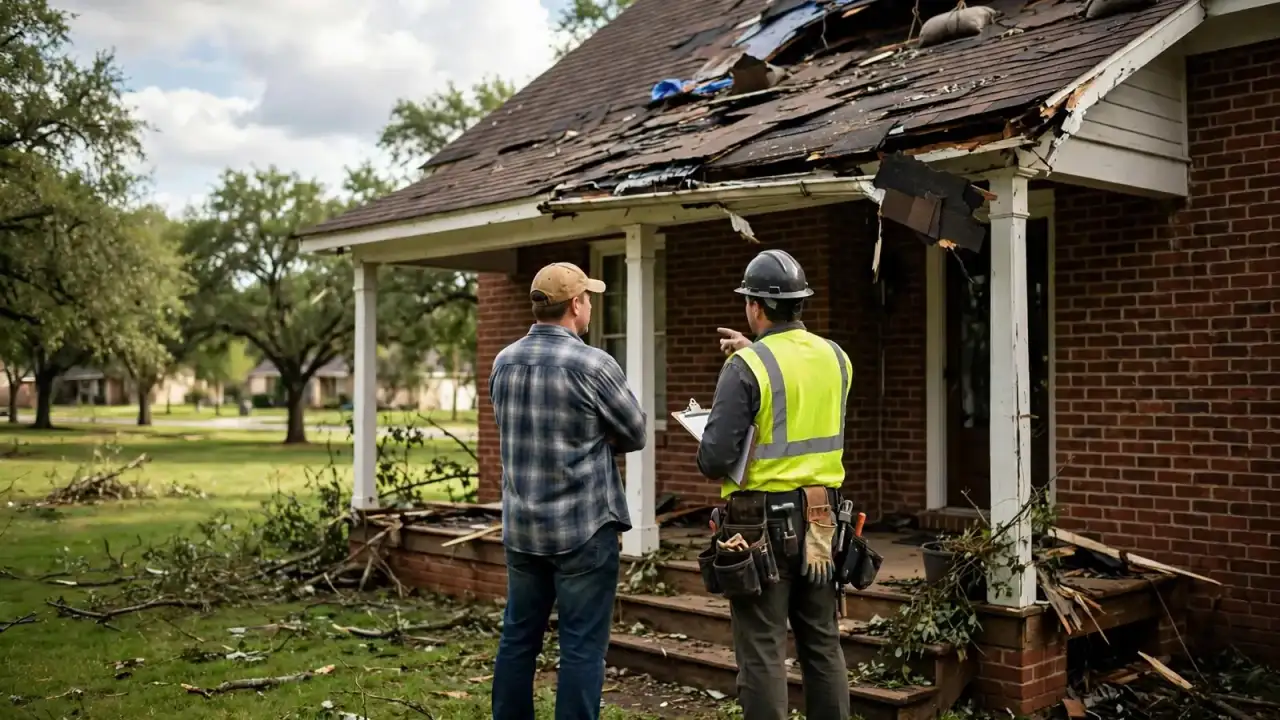
Key facts: Choosing a restoration contractor
- Texas does not have a statewide general contractor licence; some trades, such as electricians, are licensed by TDLR [1].
- Get the scope of work in writing before work begins.
- The FTC advises being wary of contractors who pressure you or ask for large payments up front [2].
- Your insurer cannot force you to use a particular contractor, though they may suggest one.
Background
Why choosing well matters
A fire restoration job can run for weeks and touch every room. The contractor you choose will handle your belongings, open your walls, work with your insurer and decide what can be saved. A good one makes the process clearer; a poor one can leave hidden moisture, lingering odor and a dispute with your insurer.
In Texas, there is no general state licence for restoration companies or general contractors. Certain trades are licensed through the Texas Department of Licensing and Regulation, including electricians and air conditioning contractors, and mold assessment and remediation have their own licences [1]. That means you cannot simply look up a single licence number to judge a restoration company; you have to ask questions.
Checklist
Questions to ask any restoration contractor
- 1
Insurance
Ask for proof of general liability and workers' compensation coverage.
- 2
Written scope
Ask for a written description of the work before it starts, and how changes are handled.
- 3
Documentation
Ask how they photograph, measure moisture and inventory contents, and whether you get copies.
- 4
Who does the work
Ask whether their own crews or subcontractors will do each part.
- 5
Licensed trades
Ask who will do electrical, HVAC and any mold work, and confirm those licences with TDLR.
- 6
Permits
Ask whether City of Arlington permits are needed and who will pull them.
- 7
Standards
Ask whether they follow recognized industry practices such as the IICRC documents.
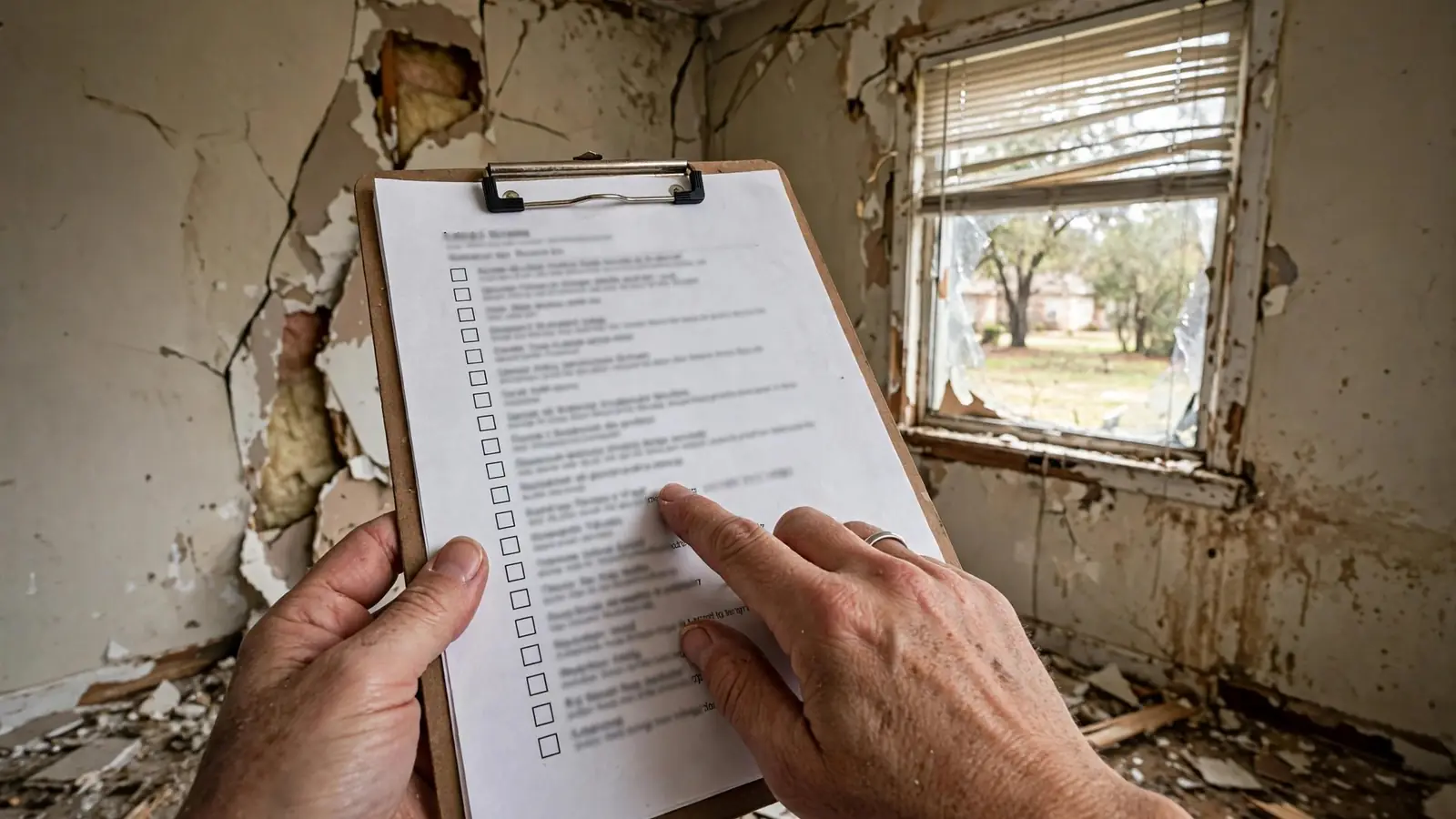
Warning signs
Red flags
| Red flag | Why it matters |
|---|---|
| Pressure to sign immediately | Good contractors give you time to read and ask questions |
| Large payment demanded up front | The FTC advises caution with big advance payments |
| No written scope | Leaves room for disputes later |
| Asks you to sign over insurance benefits without explanation | Understand exactly what you are agreeing to |
| Will not provide proof of insurance | You may be exposed if someone is injured |
| Offers to skip permits | Unpermitted work can cause problems with insurance and resale |
Insurance
Working with your insurer
Your insurer may recommend restoration companies from a preferred list. You can use them, but you are generally free to choose your own contractor. Either way, make sure the contractor communicates clearly with your adjuster, shares documentation, and explains any differences between their scope and the insurer's estimate.
Keep copies of everything: contracts, change orders, photos, moisture logs and invoices. The Texas Department of Insurance offers guidance if you have questions about how your claim is handled. [3]
How calls work
About this referral line
When you call the number on this site, your call is connected to an independent restoration contractor serving Arlington. We do not employ or supervise contractors, and we do not vouch for their work. Use the questions on this page on that call, and choose whoever you are comfortable with. You are never obliged to hire the contractor you speak with.
On the call
What a good first conversation sounds like
A capable restoration contractor will ask you as many questions as you ask them. Expect questions about where the fire started, how long it burned, whether water was used, whether the heating or air conditioning was running and whether the fire department has released the house. They should be able to describe, in plain terms, what usually happens next: securing the house, drying, cleaning, odor work and repairs.
They should not promise a finished date before seeing the house, guarantee that everything can be saved, or tell you what your insurer will pay. Clear, cautious answers are a better sign than confident promises.
If the conversation leaves you uneasy, you are free to end it and look elsewhere. The contractor you are connected with through this line is one option, not an obligation.
Making sense of estimates
Comparing two scopes of work
If you talk to more than one contractor, or compare a contractor's scope with your insurer's estimate, look at what each includes rather than only the total. Does each one include drying, contents cleaning, duct cleaning, odor treatment, sealing and painting? Does one assume carpet will be cleaned while the other replaces it? Are attic insulation and ductwork addressed?
Differences usually come from different assumptions about what can be saved. Ask each contractor to explain theirs. A good contractor will walk you through the reasoning and show photos or readings to support it.
Paperwork
Documents to keep from your contractor
- Signed agreement and scopeThe written description of the work and how changes are handled.
- PhotosBefore, during and after photos of each room.
- Moisture logsDaily readings that show the house was dried.
- Contents inventoryWhat was packed out, cleaned, returned or discarded.
- Change ordersAny additions or changes to the work, in writing.
- Invoices and receiptsFor your records and your insurer.
- Permit recordsIf City of Arlington permits were required.
Mold
Mold work has its own licences in Texas
If moisture from firefighting leads to mold growth, Texas rules come into play. Mold assessment and mold remediation are licensed activities in Texas, administered by the Texas Department of Licensing and Regulation, and above certain sizes the work must be done by licensed professionals. Ask whether a contractor holds those licences or works with someone who does if mold is found.
FAQ
Contractor questions
Is there a Texas licence for restoration companies?
There is no general state licence for restoration or general contractors. Electricians, HVAC contractors and mold specialists are licensed by TDLR.
Do I have to use my insurer's contractor?
Generally no. You can choose your own, though your insurer may suggest companies.
Should I get more than one opinion?
If time allows, yes. Comparing scopes helps you understand what is needed.
What should a contract include?
A clear scope, how changes are handled, schedule expectations, insurance information and who does each trade.
How soon should I choose a contractor?
Emergency steps such as board-up and drying should start quickly, but you can take a little longer to choose who handles the full restoration. Ask questions before signing a larger contract.
Can I change contractors partway through?
Usually, though it depends on your contract. Read the terms about cancellation and work already completed before you sign.
Should the contractor talk to my adjuster directly?
It often helps. Ask the contractor to share photos and scope with your adjuster and copy you on what they send.