
Key facts: Southeast Arlington
- Southeast Arlington includes single-family homes from the 1970s to the 2000s alongside townhomes and apartment communities.
- In townhomes and apartments, smoke and water can travel through shared walls, floors and attic spaces into neighboring units.
- Most homes here sit on concrete slabs over expansive clay soil.
- Renters insurance typically covers tenants' belongings and extra living expenses, while the owner insures the building.
- The covered ZIP codes for Southeast Arlington on this site are 76014 and 76018.
Covered area
Southeast Arlington ZIP codes covered by this line
Calls from these Southeast Arlington ZIP codes can be connected to an independent restoration contractor serving the area.
- 76014East and southeast Arlington neighborhoods toward Highway 360 and Grand Prairie.
- 76018Southeast Arlington neighborhoods along the Interstate 20 corridor and toward the southern city limits.
About Southeast Arlington
A varied part of the city
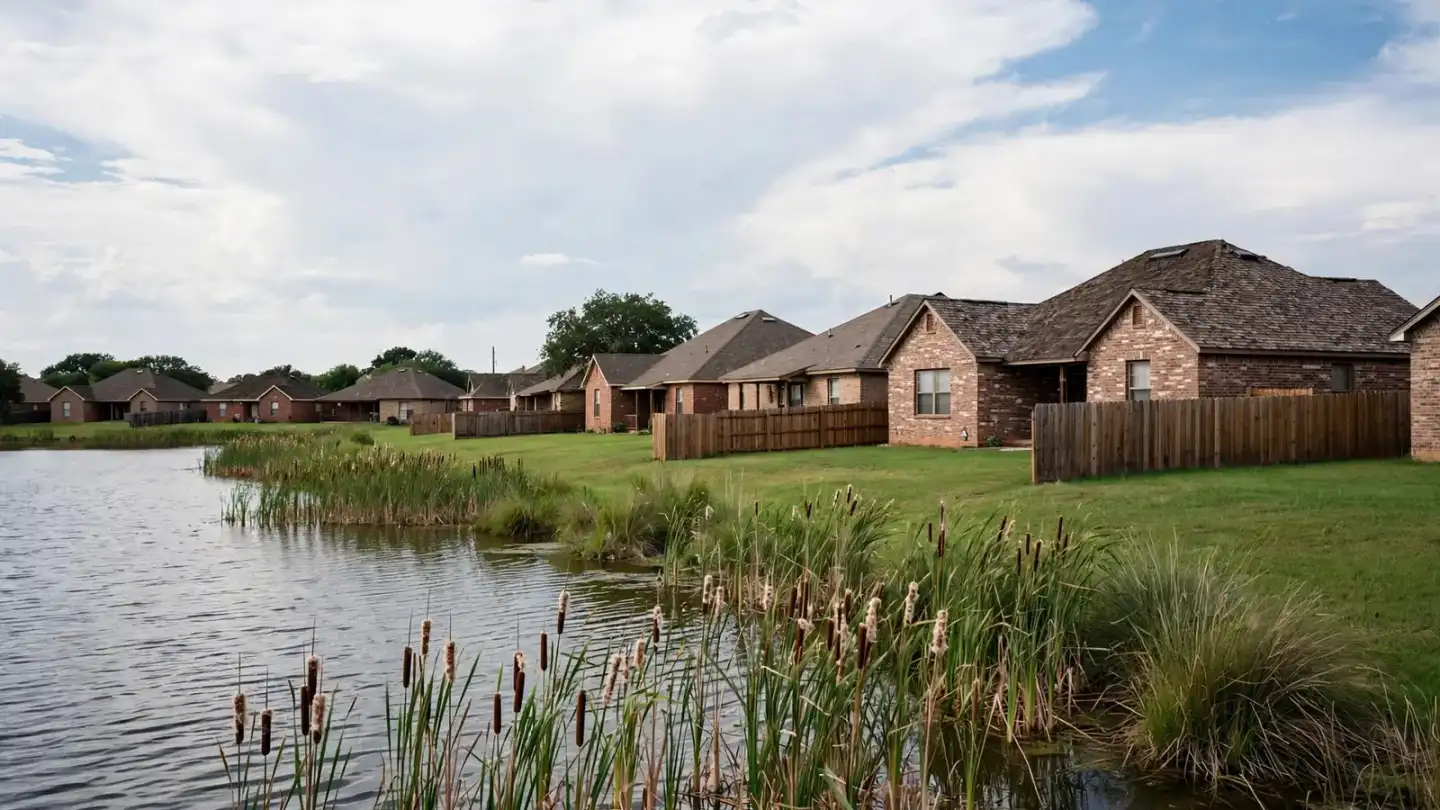
Southeast Arlington grew from the 1970s onward along the Highway 360 and Interstate 20 corridors. Its housing is more varied than many parts of the city: single-storey brick ranch homes, two-storey houses from the 1990s and 2000s, duplexes, townhome communities and large apartment complexes, along with shopping centers, offices and light industry.
That variety matters after a fire. In a detached home, the fire mostly affects one household and one insurer. In a townhome or apartment, it can affect several households, a property manager or homeowners association, several insurers and shared parts of the building such as attics, roofs and walls.
Construction is typical of North Texas: brick veneer or siding over wood framing, slab foundations, composition shingle roofs and central air with equipment in attics or closets. Townhomes and apartments have fire-rated walls between units, but smoke and water can still move through shared spaces.
Construction
Southeast Arlington construction details
Townhomes with shared walls
Fire-rated walls slow fire but smoke and water can still reach neighbors.
Apartment buildings
Corridors, stairwells and shared roofs connect units.
Single-storey brick homes
Long attics carry smoke across the house.
Two-storey 1990s-2000s homes
Smoke rises upstairs; water falls to ceilings below.
Slab foundations
Water under flooring dries slowly on concrete.
Attached garages
Garage fires push smoke into kitchens and utility rooms.
Shared buildings
When one unit burns: townhomes and apartments
Townhomes and apartments are built with fire-rated separation walls between units, and many newer buildings have sprinklers. These measures save lives and limit fire spread, but they do not stop all smoke and water. Smoke can move through shared attic spaces where separation is incomplete, through plumbing and electrical penetrations, and along corridors. Water from firefighting or sprinklers flows down into units below and sideways through floors.
After a fire in a multi-unit building, every adjoining unit should be inspected, even if it looks undamaged. Owners, tenants, property managers and associations each have roles: the association or owner usually insures the structure and common areas, unit owners insure their interiors under their own policies, and tenants rely on renters insurance for belongings and temporary housing.
Clear communication matters. Ask who is coordinating restoration for the building, and make sure your own unit's damage is documented separately.
Assessment
What a contractor should check in a Southeast Arlington home
- 1
Neighboring units (Southeast Arlington)
In shared buildings, adjoining units above, below and beside.
- 2
Shared attic spaces
Smoke can travel above separation walls if they are incomplete.
- 3
Slab floors
Moisture under carpet, tile and laminate.
- 4
HVAC
Individual unit systems and any shared ventilation.
- 5
Garage connections (Southeast Arlington)
In detached homes with attached garages.
- 6
Roof (Southeast Arlington)
Shingle condition and any openings before storms.
What you might see
Southeast Arlington fire damage clues
| What you notice | Likely reason | What to ask |
|---|---|---|
| Smoke smell in a unit next door | Smoke through shared walls or attic | Will adjoining units be inspected? |
| Water stain on a downstairs neighbor's ceiling | Firefighting or sprinkler water | Who is coordinating the building? |
| Odor in the corridor | Smoke moved through common areas | Who cleans common areas? |
| Wet carpet on a slab | Water under flooring | How will the slab be dried? |
| Soot in far bedrooms of a ranch house | Smoke through the attic | Will the attic be cleaned? |
| Smell from the garage door | Garage fire smoke | Has the shared wall been checked? |
Restoration
How restoration usually runs in Southeast Arlington
For detached homes, the sequence is familiar: secure, dry, clean, deodorize, repair. For shared buildings, the same steps happen across several units at once, often coordinated by a property manager or association. Board-up and roof tarping protect the whole building. Drying may involve several units below a fire. Cleaning covers each affected unit and common areas.
Repairs to fire-rated walls between units must restore their rating, and work generally needs City of Arlington permits. [5] Owners of individual townhomes should check their association's rules about who repairs what.
Tenants
Renters in Southeast Arlington
Many residents of Southeast Arlington rent. If you are a tenant, notify your landlord or property manager immediately after a fire. The owner usually arranges repairs to the building. Your belongings and extra living expenses, such as a hotel while you cannot live in the unit, depend on renters insurance if you have it.
Photograph your belongings before anything is moved, keep receipts for emergency purchases and ask the property manager for a timeline. If you do not have renters insurance, the American Red Cross may help with immediate needs after a home fire.
- Tell your landlord right away
- Photograph your belongings
- Keep receipts
- Contact your renters insurer
Climate
Storms, heat and slab foundations
Spring storms bring hail, wind and heavy rain. A fire-damaged roof on a house or apartment building needs covering before the next storm. In summer, attic heat releases smoke odor into top-floor units and bedrooms first. Most buildings here sit on slabs over expansive clay; water from firefighting should be directed away from foundations, and wet flooring on slabs dries slowly.
Prevention
Reducing fire risk in Southeast Arlington homes
- Cook attentivelyCooking fires are the leading cause of apartment fires as well as house fires.
- Use balcony grills only where allowedMany apartment communities restrict grills near buildings.
- Check smoke alarmsTenants should test alarms and report problems to management.
- Avoid overloaded outletsOlder units may have limited outlets.
- Keep exits clearCorridors and stairwells must stay free of stored items.
Single-family
Detached homes in Southeast Arlington
Single-family neighborhoods in Southeast Arlington range from 1970s brick ranch homes to two-storey houses from the 1990s and 2000s. Ranch homes spread smoke through a long attic; two-storey homes send smoke upstairs and water downstairs. Kitchen and garage fires are common starting points, and attached garages push heavy smoke into the house.
Restoration follows the same order as elsewhere in Arlington, with attention to attics, ducts, slab floors and, in older homes, testing materials before demolition.
Week one
A typical first week after a Southeast Arlington fire
- 1
Day 1 in Southeast Arlington
Fire department release, insurers and managers notified, building secured, photos taken.
- 2
Days 1-2 in Southeast Arlington
Water extracted in the fire unit and any units below; drying started.
- 3
Days 2-3 in Southeast Arlington
Adjoining units and common areas inspected; contents sorted.
- 4
Days 3-5 in Southeast Arlington
Drying monitored; attic and shared spaces checked.
- 5
End of the first Southeast Arlington week
Scope agreed for each unit and common areas.
On your call
Questions Southeast Arlington owners and tenants find useful on the call
- Will neighboring units be checked?Important in townhomes and apartments.
- Who is coordinating the building?Ask how the contractor works with managers and associations.
- How will you document my unit separately?Each unit's damage should be recorded on its own.
- How will you dry the slab?Ask about flooring removal and drying equipment.
- Can you work with my landlord?Tenants should know who authorizes work.
Services
Services Southeast Arlington residents ask about
Smoke between units
Cleaning smoke that crossed shared walls.
Read moreWater in units below
Drying ceilings and floors after firefighting.
Read moreSmoke from next door (Southeast Arlington)
When a neighbor's fire affects your home.
Read moreKitchen fires
Cleaning up after a grease fire.
Read more
1970s homes
Older ranch homes in Southeast Arlington
The oldest single-family streets in Southeast Arlington date from the 1970s. These are mostly single-storey brick veneer homes with long attics, a den with a fireplace and an attached two-car garage. Original features such as sprayed ceiling textures, older electrical panels and paneling may remain in homes that have not been fully updated.
After a fire, these homes need the same care as older homes elsewhere in Arlington: an electrician's inspection before power is restored, testing of older ceiling textures and flooring before demolition, attic cleaning along the length of the house and masonry-appropriate cleaning of fireplace walls. Many have been partly remodeled, so new and original materials sit side by side and need different methods.
Newer homes
Two-storey homes from the 1990s and 2000s
Newer Southeast Arlington subdivisions include many two-storey homes with open staircases, family rooms with tall ceilings and bedrooms upstairs. Smoke from a ground-floor fire rises to the upper floor and collects in bedrooms, while water from an upstairs fire soaks the ceiling below.
Drying in these homes often means opening part of the downstairs ceiling to dry the floor cavity, removing wet insulation and running equipment until readings are normal. Cleaning upstairs rooms and high areas is often the largest part of the smoke job.
Sprinklers
Apartment fires and sprinklers
Many apartment buildings in Southeast Arlington, especially newer ones, have automatic fire sprinklers. A sprinkler head opens only where heat reaches it and usually controls a fire with far less water than a fire hose. Even so, an activated sprinkler releases water steadily until it is shut off, and that water can reach units below.
After a sprinkler activation, the unit with the fire and those beneath it need drying. Sprinkler water is cleaner than firefighting water but picks up soot as it falls, so porous materials near the fire may still need removal. Building management typically coordinates the sprinkler system's reset and inspection.
Nearby fires
Highways, industry and outside smoke
Southeast Arlington lies along busy highways and near commercial and light industrial areas. Vehicle fires, grass fires along highway right-of-way and fires at commercial buildings can send smoke into nearby homes. Outside smoke usually leaves lighter residue in filters, ducts and fabrics. Replace filters, launder fabrics and have ducts checked if odor lingers after a nearby fire.
Vehicles
Garages, carports and parking areas
Single-family homes in Southeast Arlington usually have attached garages, while apartment communities have carports and open parking. Vehicle fires in carports can spread to the carport structure and nearby buildings, and smoke can reach units close by. Garage fires in houses send heavy smoke into the kitchen or utility room.
After a vehicle or carport fire near an apartment building, residents of nearby units should check for smoke odor and report it to management. Vehicle damage is usually handled by the vehicle owner's auto insurer.
Documentation
Keeping records as a unit owner or tenant
In a shared building, it is easy for one unit's damage to be overlooked among many. Photograph your unit room by room before cleanup, including closets and any ceiling stains from water above. List damaged belongings with descriptions and approximate ages. Keep copies of everything you send to the property manager, association or insurer, and note the date and person for each conversation.
If your unit was affected only by smoke or water from another unit, make sure that is clearly recorded; it can matter for how claims are handled between insurers.
Top floors
Heat in top-floor units
Top-floor apartments and townhome upper levels sit directly beneath the roof and attic. In North Texas summers, attic heat releases smoke odor from insulation and roof decking into those units first, even when the fire was elsewhere in the building. If odor returns on hot afternoons after cleaning, the attic above may still hold residue. Report it to building management so the attic can be inspected and treated.
FAQ
Southeast Arlington fire restoration questions
Does this line cover Southeast Arlington?
Yes. Calls from ZIP codes 76014 and 76018 can be connected to an independent restoration contractor serving the area.
A fire in the next unit left smoke in mine. Who handles it?
Report it to your landlord or association and your own insurer. Adjoining units are usually inspected as part of the building's restoration.
I rent. Do I need to arrange cleaning?
Usually the owner arranges building restoration. Your renters insurer handles your belongings and extra living expenses.
Water came through my ceiling from the unit above. What now?
Keep away from sagging ceilings, photograph the damage and notify management. Drying should start quickly.
Do townhome owners need their own policy?
Usually yes. The association's master policy may cover some of the structure; your policy covers your interior and belongings.
Who repairs the wall between townhomes?
It depends on your association's rules and policies. Fire-rated walls must be restored to their rating.
Does the Red Cross help apartment residents?
The American Red Cross helps people affected by home fires with immediate needs, including renters.
Do I need permits to rebuild in Southeast Arlington?
Regulated repair work in Southeast Arlington generally needs City of Arlington permits.
Can my unit be cleaned while neighbors are being repaired?
Often, if your unit is safe and utilities work. The contractor may sequence work across units.
Why does the corridor smell of smoke weeks later?
Common areas may hold residue in carpet, ceilings and ventilation. Report it to management.
Did the sprinklers cause more damage than the fire?
Sprinklers release far less water than fire hoses and usually limit damage overall, but units below may still need drying.
My older home has a popcorn ceiling. Is it a concern?
Textures from before the 1980s may contain asbestos. Ask for testing before any scraping or removal.
Can smoke from a highway grass fire get into my house?
Yes, through windows, vents and gaps. Replace filters and clean fabrics, and check the attic if odor lingers.
How do I make sure my unit is not forgotten?
Photograph everything, write to the property manager or association and your insurer, and keep copies of all communication.
My car was in the carport fire. Who pays?
Usually your auto insurer under comprehensive coverage. Report it separately from any home or renters claim.
Why does my top-floor unit smell worst in the afternoon?
Attic heat releases odor from smoky insulation and decking above your unit. The attic may need cleaning or sealing.
Can I break my lease after a fire?
That depends on your lease and Texas law about uninhabitable units. Check your lease and ask your landlord in writing.
Who cleans my balcony after a fire?
Balconies are often part of the building's exterior; ask management. Clean your own furniture and plants with care.
Should I replace my renters insurance after a claim?
Keep your coverage active and update your inventory once you are settled again.
Can I stay with neighbors in the same building?
Only if their unit was not affected and the building has been cleared as safe. Ask management first.
Do townhome fire walls get inspected after a fire?
They should be. Damaged fire-rated walls must be repaired to restore their rating, usually with permits.
Who handles the shared roof?
Usually the association or building owner. Report leaks or tarp problems to them promptly.
Are apartment carpets replaced after smoke?
Often in the unit with the fire. Neighboring units with light smoke may only need cleaning.
Can I get my security deposit back after a fire?
That depends on your lease and the cause. Talk to your landlord in writing.
Shared spaces
Common areas and corridors
In apartment buildings and some townhome communities, smoke reaches hallways, stairwells, laundry rooms and mailrooms. These spaces are the responsibility of the owner or association and need cleaning along with individual units. Carpeted corridors and acoustic ceilings hold odor; ventilation systems serving common areas need checking. Residents should report lingering smoke smell in common areas so it can be addressed.
Insurance
Multiple insurers, one fire
A single fire in a shared building can involve the building owner's or association's insurer, each unit owner's insurer and each tenant's renters insurer. Each covers different things. Expect adjusters from more than one company, and keep your own records: photos of your unit and belongings, receipts and a log of conversations. The Texas Department of Insurance explains the different types of homeowners and renters policies. [2]